Seafood sustainability is often discussed in broad terms, but understanding what it actually means is far more complex. Protecting fish populations is only one part of the picture. Seafood production also affects ecosystems, climate, governance systems and animal welfare, all of which shape the long-term sustainability of fisheries and aquaculture.
Recognising this complexity, the VeriFish project developed an Environmental Pillar as part of its wider sustainability framework, helping structure and communicate environmental information in a clearer and more transparent way.
A broader view of environmental sustainability
Within the VeriFish framework, sustainability is assessed through three interconnected pillars:
- Environmental
- Socio-economic
- Nutrition & Health
The Environmental Pillar focuses specifically on how seafood production interacts with marine ecosystems and natural resources. Importantly, VeriFish distinguishes between fisheries and aquaculture, recognising that both systems involve different environmental pressures and therefore require different indicators.
Rather than reducing sustainability to a single simplified score, the framework brings together multiple dimensions of environmental performance to provide a more balanced and evidence-based understanding.
Looking at stock status and governance
One of the central components of the Environmental Pillar is Stock Status.
This indicator examines whether fish populations are being harvested within safe biological limits, helping assess the long-term viability of fisheries. Healthy fish stocks are essential not only for ecosystems, but also for food security and the resilience of coastal communities.
However, sustainability is not only about the condition of the resource itself. It also depends on the systems managing it.
For this reason, the framework includes Governance indicators, which assess the legal and management structures surrounding fisheries and aquaculture. Transparent governance, regulatory compliance and effective management systems are essential to ensuring that sustainability measures are meaningful and enforceable.
Ecological and climate impacts
The Environmental Pillar also addresses how seafood production methods affect surrounding ecosystems.
In fisheries, this includes examining how different gears and harvesting practices interact with marine habitats and non-target species. In aquaculture, environmental considerations include production systems and resource management practices.
Alongside ecological impacts, VeriFish also integrates Climate Impact indicators, providing information related to fuel consumption, energy use and associated carbon footprints.
These indicators help make visible the environmental footprint behind seafood products, supporting more informed discussions about sustainability.
Including animal welfare in the conversation
Environmental sustainability also involves how aquatic animals are treated during production and capture.
The VeriFish framework therefore incorporates Welfare indicators, recognising that responsible seafood systems should also consider the conditions under which animals are raised, handled and harvested.
Including welfare within the environmental discussion reflects a broader understanding of sustainability—one that extends beyond resource management alone.
From complex data to usable information
One of the main goals of VeriFish is not simply to collect data, but to organise it in a way that can be understood and applied.
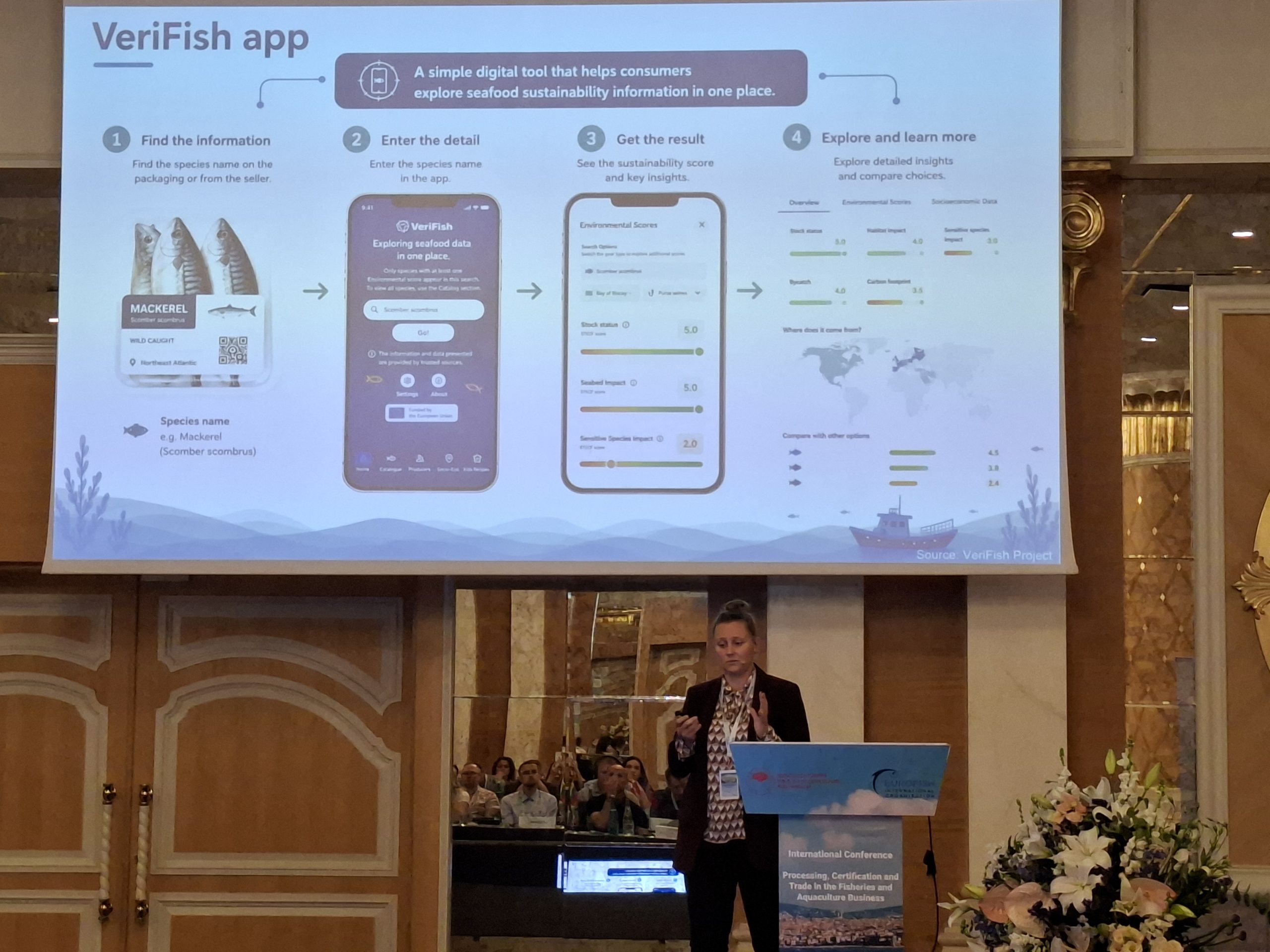
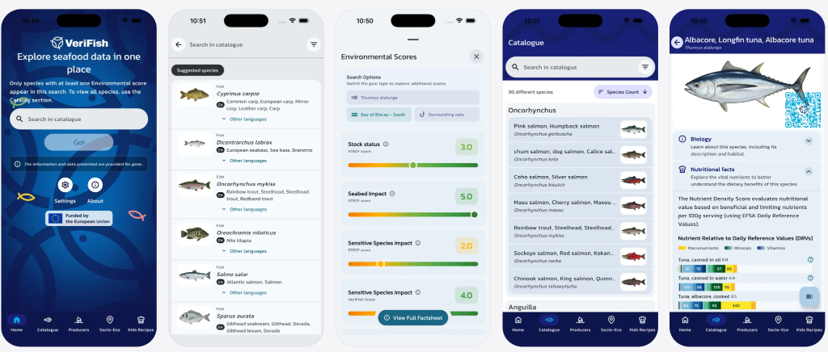
The Environmental Pillar is integrated into the VeriFish web application, where users can explore environmental indicators, factsheets and sustainability information across different species and production systems.
The indicators are also explained within the VeriFish Guidelines, which provide recommendations for communicating seafood sustainability transparently and responsibly.
Together, these tools aim to help producers, retailers, policymakers and consumers navigate sustainability information with greater clarity.
Sustainability as a set of choices
The VeriFish Environmental Pillar highlights a key principle of the project: sustainability is not static.
It is shaped by production practices, governance systems, environmental conditions and the choices made across the seafood value chain. By making environmental information more accessible and evidence-based, VeriFish supports better understanding and more informed decisions.
Because protecting the future of seafood depends not only on what we produce, but also on how we understand its impact on the planet.