After 24 months of work under the Horizon Europe programme, the VeriFish project has reached the end of its funded period. While the project timeline concludes, its results remain active, available and designed to continue supporting the seafood sector.
VeriFish was developed with a clear objective: to improve how seafood sustainability is understood and communicated. The project addressed sustainability as a multidimensional concept, integrating environmental performance, socio-economic conditions and nutrition and health.
From fragmented information to structured communication
One of the main challenges in seafood sustainability is not the absence of information, but its fragmentation. Environmental data, nutritional values and socio-economic aspects are often communicated separately, making it difficult for stakeholders to form a coherent understanding.
VeriFish addressed this by developing a sustainability indicator framework that brings these dimensions together into a structured system. This framework allows information to be communicated in a way that is transparent, evidence-based and consistent.
Importantly, VeriFish does not function as a certification scheme or a product approval system. Instead, it provides a framework to support clearer communication and informed decision-making across the seafood value chain.
From framework to tools
To make the framework usable in practice, the project developed several key outputs.
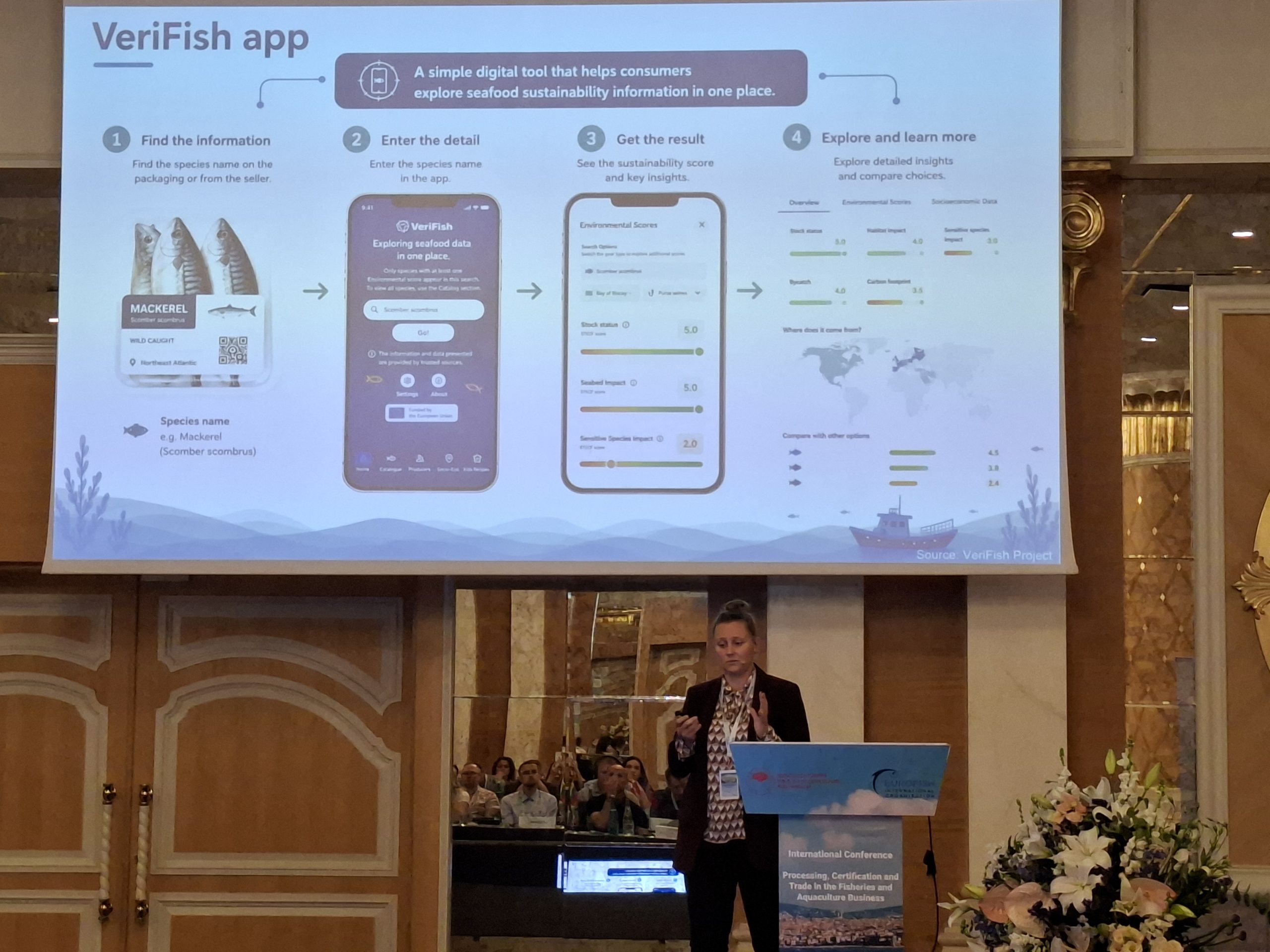
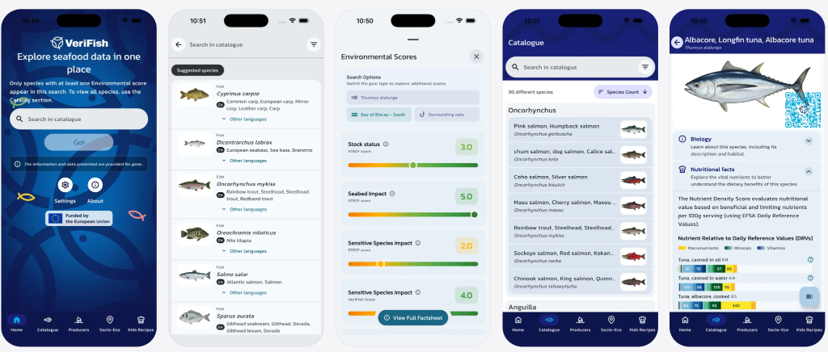
The VeriFish web application translates the indicator framework into a digital tool, allowing users to explore species data, sustainability indicators, nutritional information and factsheets. The app demonstrates how complex datasets can be organised and presented in an accessible format.
The Guidelines for the use of seafood verifiable indicators provide practical recommendations for stakeholders who need to communicate sustainability information. They support responsible communication across packaging, retail, digital platforms and educational contexts.
In addition, VeriFish contributed to a CEN Workshop Agreement process, helping to develop good practices for seafood sustainability communication at a broader level.
From information to engagement
Recognising that information alone is not enough, VeriFish also invested in communication and educational tools designed to reach wider audiences.
These include videos, articles, factsheets, a cookbook with recipe cards, a fishing gear poster, a reusable calendar, a puzzle and poster about seafood species and the Overfished! card game. These materials translate complex sustainability concepts into formats that are accessible, engaging and adaptable for different contexts.
A legacy designed to be used
The conclusion of the project does not mark the end of its impact. All VeriFish outputs, the framework, the web app, the guidelines and the media products, remain available through the project website.
Their value will depend on how they are used.
Whether by producers seeking to communicate product information more clearly, educators introducing sustainability concepts, policymakers exploring indicator-based approaches, or citizens making informed choices, the VeriFish legacy is intended to continue evolving through application.
Looking forward
VeriFish closes as a project, but its contribution continues through the tools and approaches it has developed.
By providing a structured way to understand and communicate seafood sustainability, it contributes to a broader shift: from fragmented claims toward transparent, evidence-based and multidimensional communication.
This is not an endpoint, but a foundation for future work across fisheries and aquaculture.