When seafood sustainability is discussed, the focus often falls on environmental performance: stock status, ecosystem impacts, or carbon footprint. While these are essential, they do not tell the full story.
Seafood systems are not only ecological. They are also social and economic. Behind every fishery or aquaculture operation are workers, communities, governance systems and value chains that shape how seafood is produced and brought to market.
Recognising this, the VeriFish project has developed a Socio-Economic Pillar as part of its broader sustainability framework, ensuring that the human dimension is assessed alongside environmental and nutritional considerations.
A multidimensional approach to sustainability
VeriFish defines seafood sustainability through three interconnected pillars:
- Environmental
- Socio-economic
- Nutritional
These pillars are not interchangeable. They address different questions, rely on different types of data and respond to different societal needs. The socio-economic pillar specifically focuses on how seafood production relates to fairness, working conditions, governance and livelihoods.
By integrating these dimensions, VeriFish moves beyond simplified sustainability narratives and provides a more structured and comprehensive understanding of seafood systems.
Assessing the human dimension of seafood
The VeriFish Socio-Economic Pillar evaluates seafood production across a risk-based spectrum, using indicators linked to best practices in areas such as:
- fair wages and labour conditions
- treatment of workers
- governance and transparency
To ensure consistency and credibility, these indicators are built on internationally recognised reference frameworks and datasets.
Among them are the conventions of the International Labour Organization, which establish global standards for workers’ rights, safety and equality. These conventions provide a baseline for assessing whether production systems align with principles of decent work and social responsibility.
The framework is further supported by independent global indices, including:
- the Global Slavery Index
- Transparency International’s Corruption Perceptions Index
- the ITUC Global Rights Index
These sources contribute to evaluating governance conditions, risks related to forced labour, and the broader institutional context in which seafood production takes place.
From fragmented data to structured indicators
One of the main challenges in socio-economic sustainability is not the lack of information, but its fragmentation.
VeriFish addresses this by bringing together different data sources into a coherent indicator framework, where information is:
- translated into comparable scores
- weighted according to relevance
- linked to transparent and traceable sources
This allows users to understand how specific fisheries or aquaculture systems perform in terms of fairness, equality and respect for human rights, without oversimplifying the underlying complexity.
Importantly, the framework does not claim to certify or approve products. Instead, it provides a structured way to interpret available evidence and communicate it responsibly.
Making socio-economic sustainability accessible
The socio-economic indicators developed within VeriFish are not confined to technical reports. They are made accessible through the project’s main outputs:
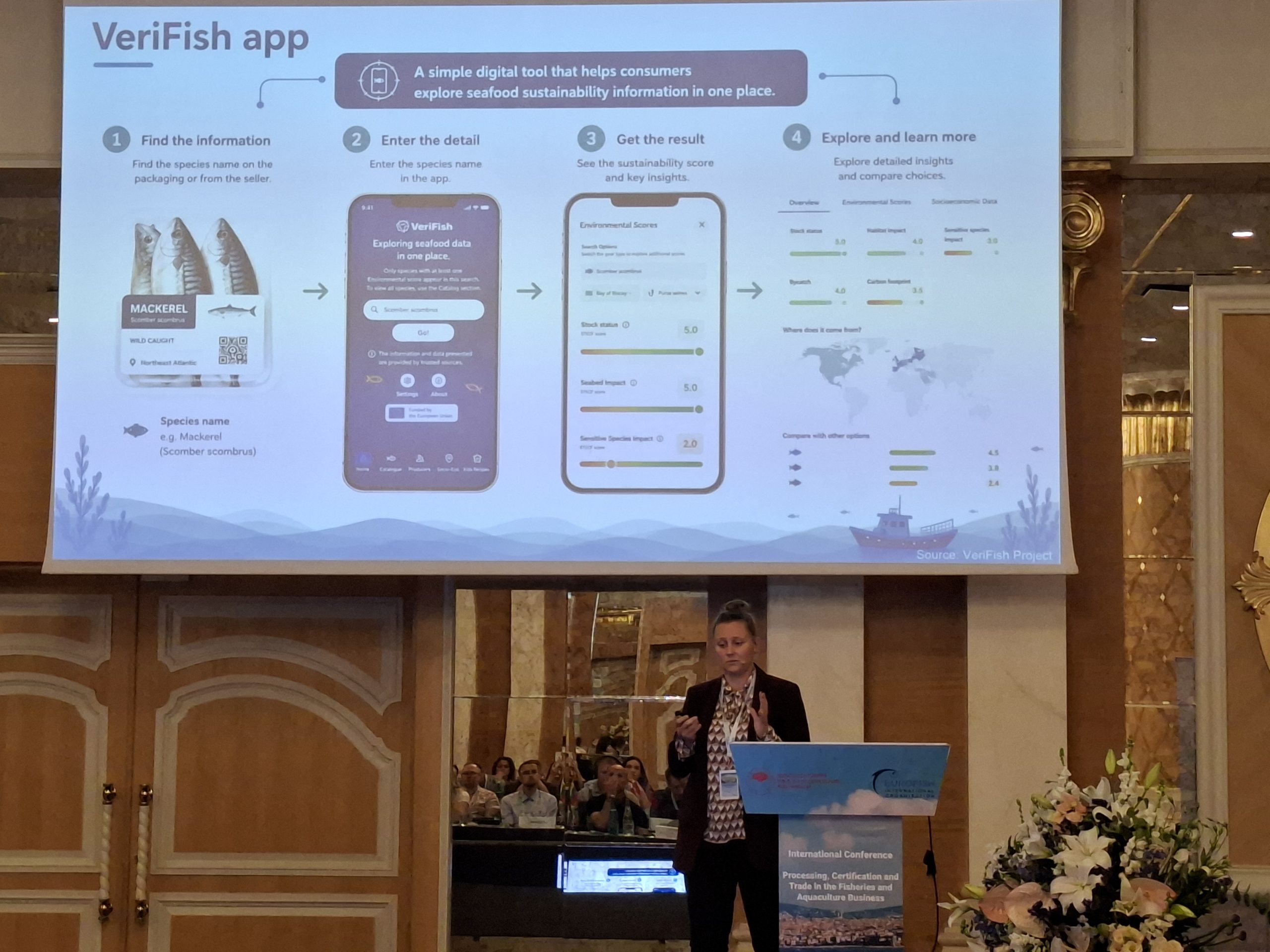
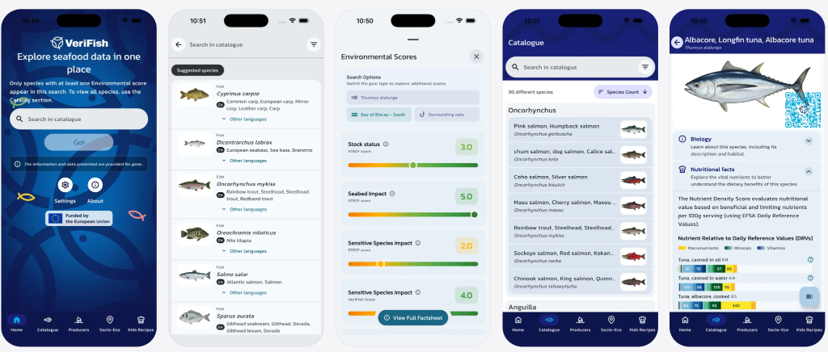
- the VeriFish web application, where users can explore indicators and scores across species, production systems and locations
- the VeriFish Guidelines, which explain how to communicate sustainability information in a transparent and evidence-based way
These tools are designed for a wide range of users, from producers and retailers to policymakers and consumers, supporting more informed decisions across the seafood value chain.
Why the human dimension matters
Sustainability that focuses only on environmental performance risks overlooking critical aspects of how seafood is produced.
Working conditions, governance quality and social equity are not secondary issues. They are fundamental to the long-term viability and legitimacy of seafood systems.
By integrating socio-economic indicators into its framework, VeriFish highlights that sustainability is not only about preserving ecosystems, but also about ensuring that seafood production supports decent livelihoods, fair practices and responsible governance.
From information to action
The inclusion of the socio-economic pillar reflects a broader principle of the VeriFish approach: sustainability is not a static label, but a set of informed choices.
Whether for purchasing decisions, policy development or corporate communication, the value of sustainability information lies in how it is used.
VeriFish provides the structure, the data and the tools. The next step depends on how stakeholders apply them.
Sustainability is not only about the environment. It is also about the people who make seafood possible.