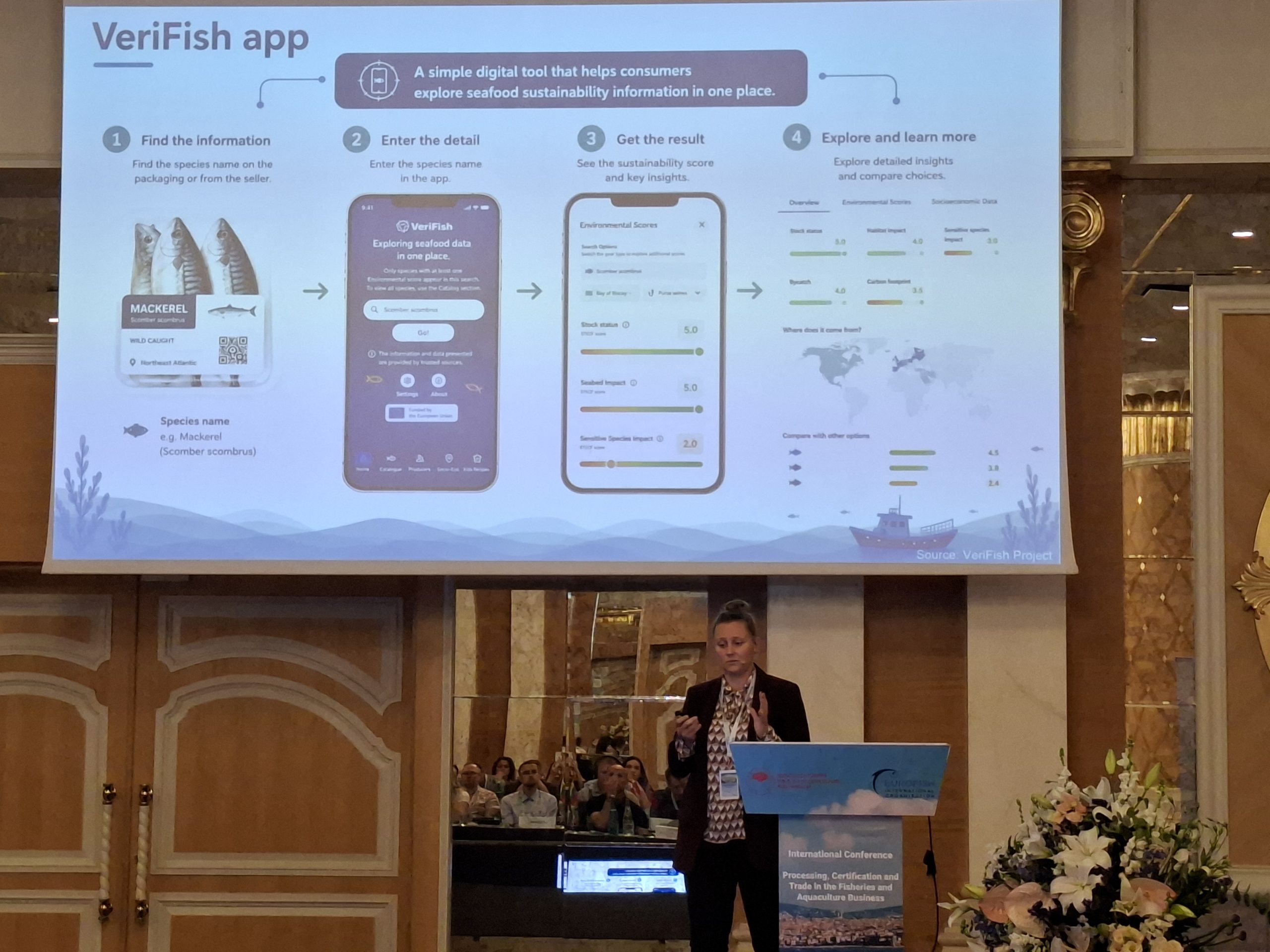
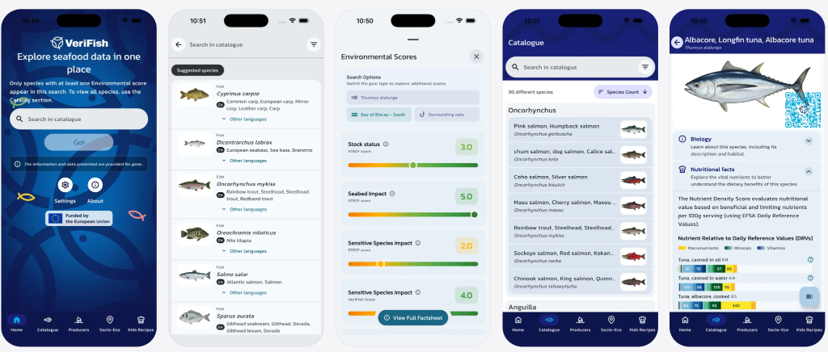
New VeriFish poster explains fishing methods in a clear and visual way

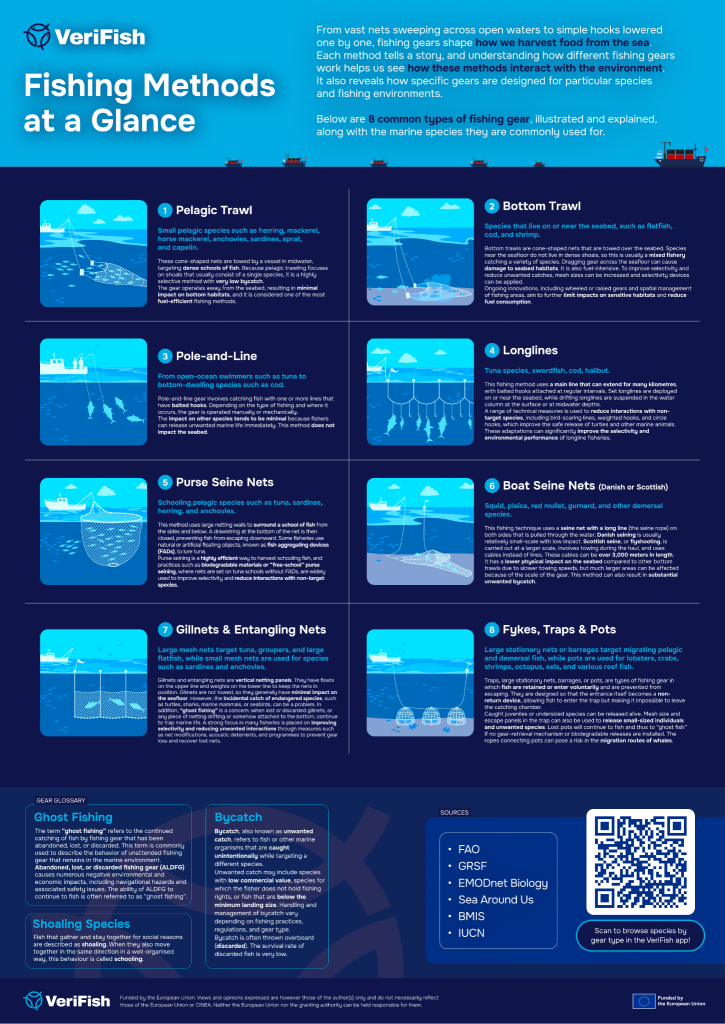
VeriFish has released a new educational poster, Fishing Methods at a Glance, designed to make one of the most overlooked parts of seafood communication easier to understand: how fish are actually caught.

From pelagic trawls operating in open water to pots and traps placed on the seabed, fishing gears shape the way seafood is harvested, the species that are targeted, and the kinds of interactions that can occur with marine environments. Yet for many people, these methods remain abstract or unfamiliar. The new VeriFish poster addresses that gap through a simple, visual and accessible format.
A practical resource for understanding fisheries

The poster presents 8 common types of fishing gear, each illustrated and briefly explained. It helps readers understand not only how these gears work, but also the kinds of species they are commonly used for. Among the methods included are:

  • Pelagic trawl
  • Bottom trawl
  • Pole-and-line
  • Longlines
  • Purse seine nets
  • Boat seine nets
  • Gillnets and entangling nets
  • Fykes, traps and pots

By bringing these methods together in a single visual resource, the poster offers a straightforward introduction to the diversity of fishing practices used across marine fisheries.

Why this matters

Public discussions around seafood often jump too quickly to conclusions about what is “good” or “bad” without explaining the systems behind production. That is a problem. Better understanding begins with better explanation.

Fishing methods are not interchangeable. Different gears are designed for different environments and species, and their effects depend on how, where and for what purpose they are used. Explaining these differences clearly is essential for more informed discussions around fisheries, seafood sustainability and ocean literacy.

The goal of this poster is not to oversimplify fisheries, but to provide a more accessible entry point into a complex subject.

More than illustrations: key concepts at a glance

In addition to the gear overview, the poster includes a short glossary introducing important terms that frequently appear in fisheries and sustainability discussions, including:

Bycatch – the unintended capture of non-target species or specimens below legal size or minimum landing requirements.

Ghost fishing – the continued capture of marine organisms by lost, abandoned or discarded fishing gear.

Schooling species – fish that gather and move together in coordinated groups for social reasons or defence.

These terms are often used in technical or policy contexts without explanation. Including them directly on the poster helps connect visual understanding with the broader vocabulary of fisheries communication.

Connected to the VeriFish app

The poster also includes a QR code that links users to the VeriFish app, where species can be explored by gear type. This creates a bridge between a static educational resource and a more interactive digital tool, allowing users to go further if they want to explore the topic in more detail.

This matters because posters alone are useful for visibility, but limited for depth. Linking the material to the app turns it into a better communication asset rather than a one-off graphic.

Designed for education, outreach and awareness

Fishing Methods at a Glance can be used in a wide range of settings, including:

  • educational activities
  • stakeholder events
  • workshops and presentations
  • exhibitions and awareness campaigns
  • science communication and public engagement

Its value is precisely that it makes a technical topic easier to approach without stripping away the underlying complexity.

Supporting clearer seafood communication

The poster reflects a broader objective of the VeriFish project: to improve the way seafood-related information is communicated by making it more understandable, more transparent and more useful for different audiences.

Too much communication in the seafood space assumes that people already understand the basics. Most do not. That blind spot weakens public understanding and makes sustainability communication less effective than it should be.

This poster is a small but practical step in the right direction.

Discover the poster, share it, and explore more through the VeriFish app.
David Bassett

Employed by EATiP since 2017, David is responsible for the day-to-day management and direction of this European wide multi-actor ETP. 

Working in the aquaculture industry since 2005, including a decade as the executive of a UK producer association, he has been active in numerous projects from the sixth Framework Programme. Among other roles, David has served as a director of the Scottish Aquaculture Research Forum and served on the Technical Advisory Group of the Aquaculture Stewardship Council (ASC TAG) alongside being invited as a guest lecturer at the Institute of Aquaculture, University of Stirling (UK).  

In addition to working on multiple Horizon Europe projects David is one of the Technical Experts assisting with the implementation of the EU Aquaculture Assistance Mechanism in addition to chairing the research focus group of the Aquaculture Advisory Council (AAC) and sitting on the Standing Committee on Agricultural Research – Fish Committee (SCAR-Fish). 

For further information on EATiP please see www.eatip.eu 

Paul Bulcock

Paul Bulcock is responsible for developing and maintaining aquaculture information in SFP’s systems (e.g., FishSource, AIP Directory, Metrics). He also supports development and implementation of aquaculture strategy through research and analysis.

Paul has extensive program support and aquaculture research experience (particularly in Southeast Asia), having worked for the Network of Aquaculture Centers in Asia-Pacific (NACA) and DFID’s Aquaculture and Fish Genetics Research Programme (AFGRP) at the Institute of Aquaculture, in Stirling, UK. He has an MSc in aquaculture from the University of Stirling and a BSc in marine and fisheries zoology from the University of Aberdeen.

Paul is based in the UK, in Glasgow, Scotland.

Fabio Grati

A fishery biologist presently employed at the National Research Council, Institute for Marine Biological Resources and Biotechnology (Ancona, Italy), he brings to the table more than thirty years of expertise in marine environmental conservation and sustainable resource management. Over the course of his career, he has overseen and participated in numerous international projects focused on understanding and mitigating anthropic impacts on marine ecosystems. Since 2019, he holds a membership in the Scientific, Technical and Economic Committee for Fisheries (STECF) under the European Commission. Within this role, he has chaired two STECF Expert Working Groups (EWG 22-12 and EWG 23-18), where he led efforts to establish scientifically robust yet accessible criteria and indicators for assessing the sustainability of fisheries products.

Andrea Fabris

Andrea Fabris born 11.08.1968, Italian, has a Veterinary Medicine full graduation achieved at the University of Parma. He has also a Specialization in “Farming, Hygiene, Pathology of Aquatic Species and Control of Derivative Products ” achieved at Udine University and a Specialization in “Animal Feeding” obtained at Bologna University.

Actually (from May 2016) he is Director of Associazione Piscicoltori Italiani (API – Italian Fish Farmers Association). At National level behalf of API he is member of some working groups at the General Direction for Fisheries and Aquaculture of Italian Ministry of Agriculture and Italian Ministry of Health regarding aquaculture EU rules and their implementation at national and regional level, and member of Exotic Species Aquaculture Committee – Italian Ministry of Agriculture. Lecturer on in training /courses organized by Ministry of Health, Universities and Local Veterinary Authorities; member of Board of Directors of SIPI (Italian Society of Fish Pathology).

He is also involved at international level with the Federation of European Aquaculture Producers (FEAP) as Chairman of FEAP Fish Health and Welfare Commission. Andrea is part of the FVE (Federation of Veterinarians Europe) Aquaculture Working Group, and of FishMedPlus Coalition, and from the beginning member of Aquaculture Advisory Council (AAC) where is actually Chair of WG1 – Finfish.

He published as an author or co-author about 30 articles on international and national scientific journals concerning Fish pathology and Aquaculture and more than 60 issues on divulgative (fishermen and aquaculture producers associations) publications

Anne Marie Cooper

Anne shapes global sustainable fisheries and aquaculture policies through her work at the science-policy interface. Driven by a commitment to improving human lives and aquatic ecosystems, she serves as the Professional Officer for Fisheries and Aquaculture Advice at the International Council for the Exploration of the Sea (ICES) in Copenhagen, Denmark. Anne leads ICES’ efforts in developing and applying methods to provide scientific advice on data-limited fish and shellfish stocks in the Northeast Atlantic, covering over 60% of ICES stocks. She also heads the development of ICES’
advisory framework for sustainable aquaculture. Before joining ICES, Anne advised on national fisheries, aquaculture, climate, and marine science policy in the US Senate, House of Representatives, and NOAA. She holds a Ph.D. in Conservation Biology and Development Studies and Social Change Theory and an M.Sc. in Fisheries Science from the University of Minnesota.

Pedro Reis Santos

Pedro Reis Santos is Secretary General of the Market Advisory Council (MAC), a stakeholder-led advisory body to the European Commission and to the Member States on matters relevant for the EU market of fishery and aquaculture products, as foreseen by the Common Fisheries Policy Regulation.

Before his appointment, in July 2019, as Secretary General, Mr Reis Santos worked as a consultant for a Brussels-based business intelligence service monitoring EU developments on fisheries, agriculture, food, animal welfare, alcohol and tobacco policy. Prior to that, he was a trainee at the Fisheries Unit of the Council of the European Union and a trainee at the Control Unit of the Portuguese Fisheries Authority.

Mr Reis Santos holds a Bachelor’s degree in Law and a Master’s degree in International Law and International Relations from the University of Lisbon with a thesis titled “Marine Protected Areas beyond National Jurisdiction”. Besides his first language, Portuguese, he speaks English and Spanish

Irene Kranendonk

Irene Kranendonk is the Impact Manager at Fish Tales and a board member of the Fish Tales Foundation. Her work focuses on developing and guiding Fish Tales’ sourcing criteria including management of the environmental and social certification schemes. With the Fish Tales Foundation and local partner organizations, she drives social and environmental improvements in small scale fisheries. Irene holds a master’s degree from Wageningen University in Aquaculture and Marine Resource Management and is specialized in the field of fisheries ecology. In a previous role, Irene was sustainable seafood assessor for the Dutch seafood rating scheme the VISwijzer.