On 11 March 2026, the VeriFish–FishEUTrust Final Event concluded in Brussels with a full-day public conference bringing together stakeholders from across the seafood sector. Researchers, policymakers, industry representatives, NGOs, and advisory bodies gathered to discuss how sustainability in fisheries and aquaculture can be better understood, measured and communicated.
Held at Comet Louise in Brussels, the event welcomed participants both in person and online, creating a lively forum for dialogue around the central question: what makes seafood truly sustainable?
Opening the Dialogue
The conference opened with remarks from the European Commission, followed by an introduction to the two Horizon Europe projects by Sara Pittonet (Trust-IT Services), coordinator of VeriFish, and Nives Ogrinc (Jožef Stefan Institute), coordinator of FishEUTrust. Together they highlighted the complementary objectives of the projects: improving the transparency of seafood sustainability information and strengthening trust between producers, markets and consumers.
Environmental Sustainability of Seafood
The first session explored environmental indicators for fisheries and aquaculture. Short introductory pitches were delivered by Ixai Salvo (Eurofish International Organisation) for VeriFish and Natalie Rizzo (Technical University of Denmark – DTU) for FishEUTrust.
The discussion was moderated by Michelle Boonstra (Clupea) and brought together a diverse panel including:
- Alessandro Manghisi – Aquaculture Stewardship Council (ASC)
- Anne Marie Cooper – International Council for the Exploration of the Sea (ICES)
- Carlos Mendoza – SmartWater Planet
- Ixai Salvo – Eurofish International Organisation
- Natalie Rizzo – DTU
The panel examined how environmental indicators can help provide more reliable and comparable information on seafood sustainability.
What Seafood Brings to Our Diets
The second session focused on the nutritional dimension of seafood. An introductory presentation by Sian Astley (EuroFIR) highlighted the importance of reliable food composition data and the role of seafood in healthy diets.
Chaired by Paul Finglas (EuroFIR), the panel included:
- Anton Ellenbroek – FAO Consultant
- Stephanos Cherouvis – Ecsite
- Narcisa Bandara – Instituto Português do Mar e da Atmosfera (IPMA)
Speakers discussed how nutritional indicators can be integrated into sustainability communication and help consumers better understand the dietary benefits of seafood.
Understanding the Human Side of Seafood
The final plenary session addressed the socio-economic dimension of seafood production and consumption. The session opened with a presentation from Tracy Murai (Poseidon Aquatic Resource Management) on behalf of the VeriFish project.
Moderated by Graeme Macfadyen (Poseidon), the panel featured:
- Irene Kranendonk – Fish Tales
- Petter Olsen – Nofima
- Marine Cusa – Oceana
The discussion explored how socio-economic indicators can capture the human dimension of seafood systems, including livelihoods, value chains and consumer trust.
Interactive Validation Workshops
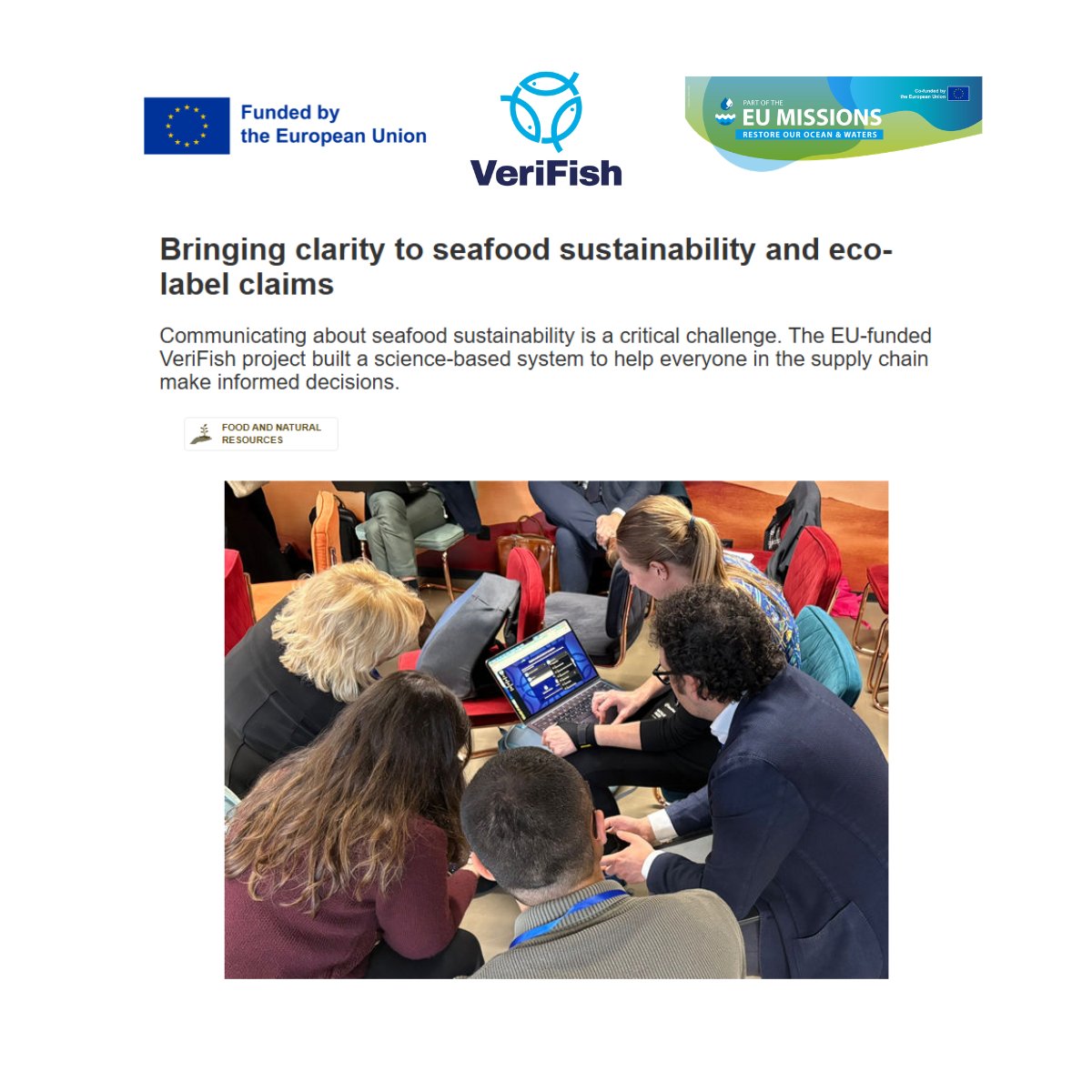
In the afternoon, participants joined interactive breakout sessions designed to validate the main outputs of the projects.
For VeriFish, the validation workshop presented three key elements:
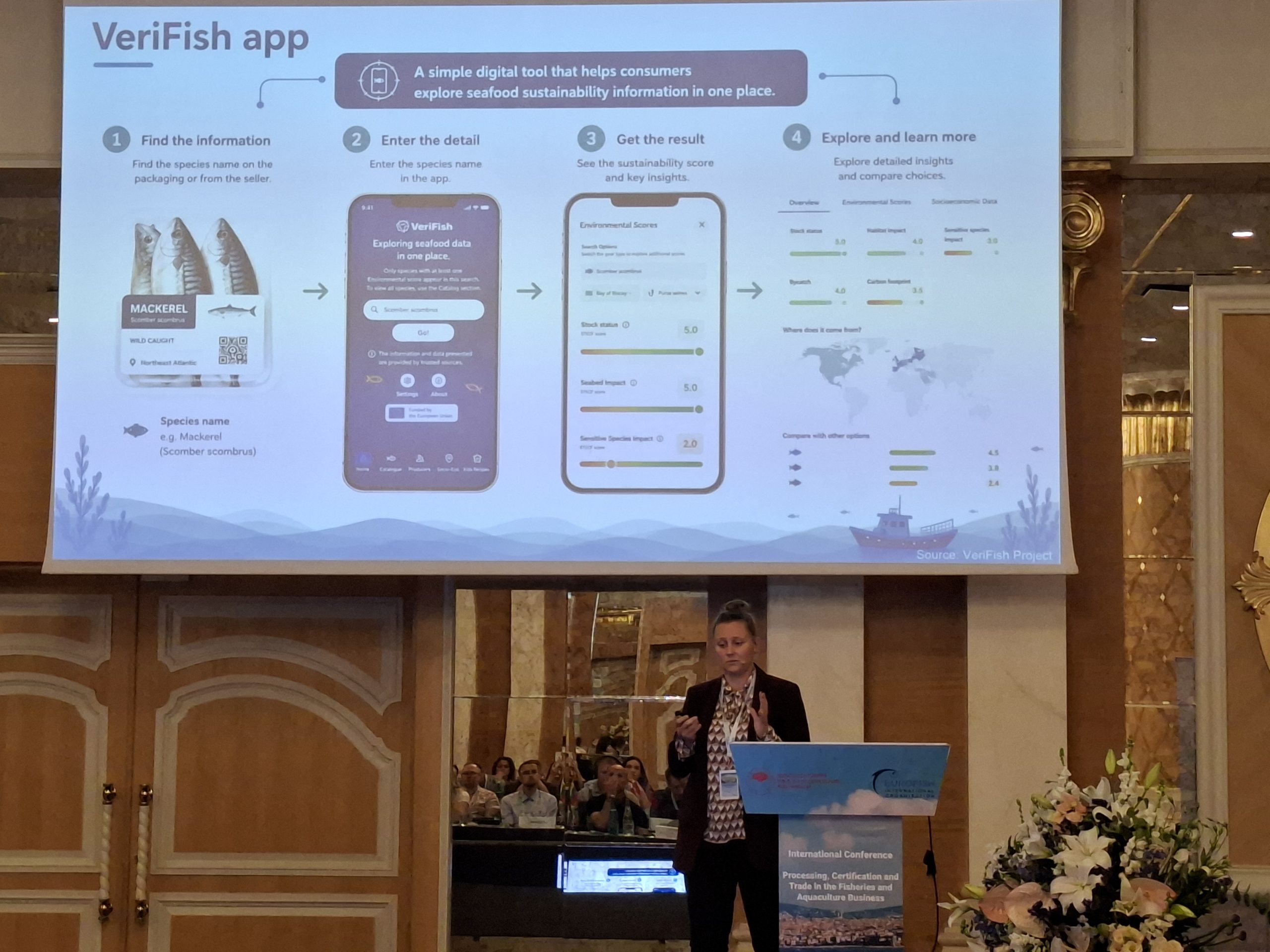
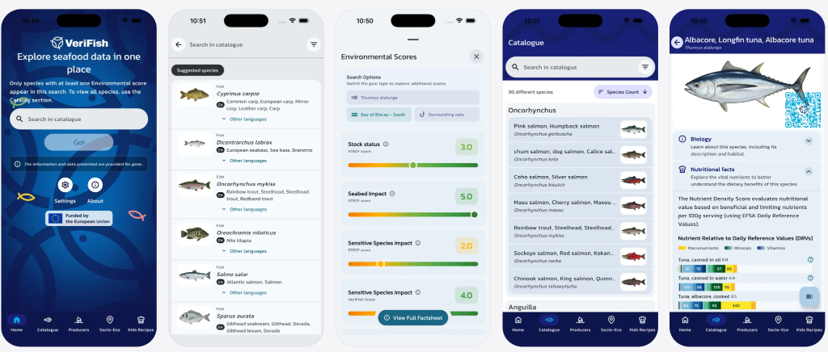
- the VeriFish web application, demonstrating how sustainability indicators can be accessed through a structured data dashboard;
- the Guidelines for the use of seafood verifiable indicators, offering practical recommendations for transparent sustainability communication;
- the media and outreach outputs developed within the project.
Participants provided feedback both in person and online, helping refine the tools and recommendations developed during the project.
Collaboration and Looking Ahead
The event concluded with a joint wrap-up by Sara Pittonet and Nives Ogrinc, summarising the discussions and highlighting the importance of continued collaboration between research, industry, policy and civil society to improve seafood sustainability communication.
The day ended with a networking reception that allowed participants to continue discussions and strengthen connections across the sector.
The organisers extend their sincere thanks to all speakers, panellists and participants, as well as to the European Commission and the Mission Ocean & Waters community, whose support made the event possible.
The VeriFish and FishEUTrust projects demonstrate that addressing seafood sustainability requires a multidimensional approach, combining environmental, nutritional and socio-economic perspectives with reliable data and transparent communication tools.