Defining Responsible Seafood Through Verifiable Data
In November 2025, during the Catch Welfare Platform Conference in IJmuiden, the VeriFish team interviewed leading experts working across fisheries and aquaculture sustainability.
They represented NGOs, research institutes, industry associations, private companies, and consulting organisations. They work on welfare, traceability, data systems, certification, innovation, and market transformation.
Despite their different roles, one message was consistent:
Responsible seafood requires structured, verifiable, multi-dimensional information.
This campaign brings together seven voices shaping the future of seafood sustainability — and shows how their work converges around the need for transparent, integrated indicators.
👉 Learn more about the [VeriFish Indicator Framework] (internal link to WP2 / indicator page)
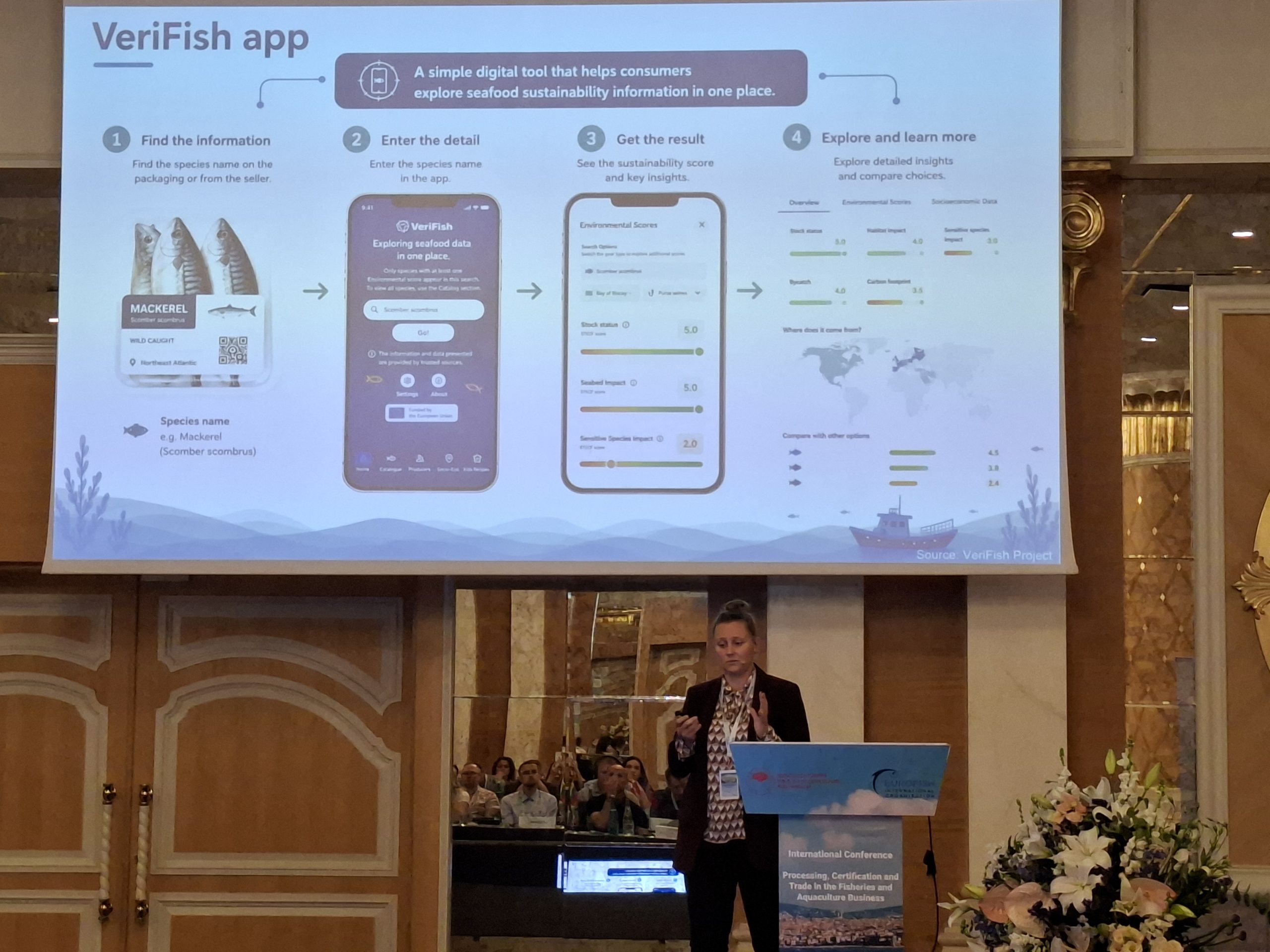
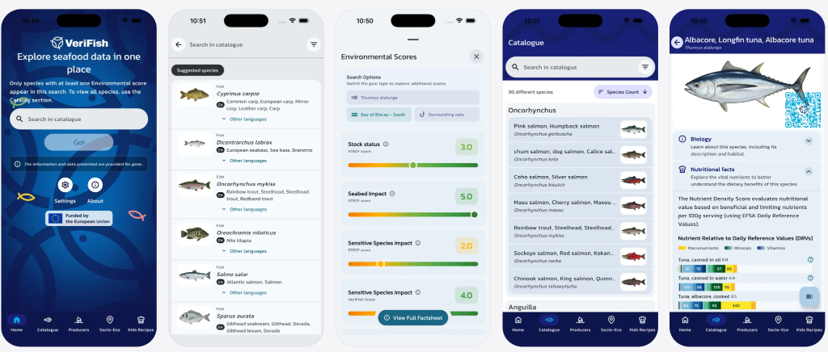
👉 Explore the [VeriFish Web App] (internal link)
Episode 1 – Integrating Aquatic Animal Welfare
Christine Xu – Aquatic Life Institute
Each year, around 100 billion fish are farmed and between 2 and 3 trillion are caught in the wild. Yet aquatic animal welfare remains largely absent from sustainability reporting and governance frameworks.
Christine Xu highlights that welfare can no longer be treated as an afterthought. Scientific knowledge exists. What is needed is integration into decision-making and reporting systems.
Platforms like VeriFish enable welfare data to sit alongside environmental, socio-economic, and nutritional indicators within the same transparent structure.
Welfare is not separate from sustainability. It is part of it.
[Embed Video 1 Here]
Episode 2 – Traceability and Data Capacity
Hoang Nguyen – Vietnam Tuna Association
Sustainability depends on credible traceability systems.
Representing the entire Vietnamese tuna supply chain, the Vietnam Tuna Association supports Fishery Improvement Programs (FIPs), MSC-related initiatives, and capacity building for handline fisheries.
Traceability and data collection are not administrative burdens. They are the foundation of good fishing practices, social responsibility, and international market access.
Structured indicator frameworks help stakeholders understand:
- What data is missing
- Where improvements are needed
- How to align with global standards
Episode 3 – Holistic Sourcing and Consumer Communication
Irene Kranendonk – Fish Tales
Mission-driven seafood companies face a central challenge: how to communicate sustainability complexity responsibly.
Fish Tales uses certification as a baseline but also evaluates gear type, habitat impact, socio-economic conditions, fair trade partnerships, and fish welfare.
You can only tell a sustainability story when it is verifiable.
Consumers cannot decode the full sustainability architecture alone. They need structured, accessible information reflecting multiple dimensions — not binary labels.
This is where indicator-based systems matter.
Episode 4 – Transparency and Accountability
Miguel Ruano – Sustainable Fisheries Partnership
Transparency strengthens governance.
Through the FishSource database, Sustainable Fisheries Partnership provides evidence-based scores on stock status, environmental impacts, fisheries management, small-scale fisheries, and fish welfare.
Open, accessible data improves decision-making across the seafood industry.
Transparency is not only reporting. It is accountability.
VeriFish complements existing tools by structuring multiple sustainability dimensions within one communicable framework.
Episode 5 – Technological Innovation at Sea
Pieke Molenaar – Wageningen Marine Research
Sustainability evolves through applied research.
Gear innovations such as low-flow codends, selective escape openings, and improved retention systems reduce damage, improve fish welfare, and support stock regeneration.
Research requires collaboration with fishers and financial support. But it generates measurable improvements in environmental performance and welfare outcomes.
Better gear today means stronger fisheries tomorrow.
Episode 6 – Supply Chain Transformation and Policy
Udo Censkowsky – Bluesensus
Transforming seafood supply chains requires systemic alignment.
Certification readiness, structured sustainability parameters, and clear legal frameworks are all essential.
Consumer awareness matters — but it has limits. Real transformation requires both informed consumers and effective regulation.
Sustainability cannot be outsourced to purchasing decisions alone.
VeriFish supports this transition by defining and integrating environmental, social, nutritional, and welfare parameters in a holistic way.
Episode 7 – Ethical Seafood and Global Perspectives
Wassem Emam – Ethical Seafood Research
Ethical seafood rests on three foundations:
Fish
Ecosystems
People
Working across Egypt and East Africa, Ethical Seafood Research focuses on making welfare measurable and operational through assessment tools, improved handling practices, and humane slaughter methods.
Animal welfare is not a luxury add-on. It supports product quality, sector performance, and social license.
Responsible seafood is incomplete if welfare is ignored.
Seven Voices. One Convergence.
Across NGOs, research institutes, industry associations, companies, and consultants, the same needs emerge:
Clear parameters
Comparable indicators
Accessible data
Holistic assessment
Public accountability
Environmental performance.
Socio-economic responsibility.
Nutritional value.
Animal welfare.
Traceability and governance.
These dimensions are interconnected.
VeriFish does not replace certification schemes or existing databases. Instead, it provides a structured framework that integrates these sustainability dimensions into a coherent, communicable system.
The question is no longer whether seafood should be sustainable.
The question is how sustainability is defined, measured, and communicated transparently.
That is the role of VeriFish.
👉 Explore the [VeriFish Web App]
👉 Discover the [Indicator Framework]
👉 Read our [Guidelines for Communicating Verifiable Seafood Indicators]