
Turning indicators into clear, responsible communication
Sustainability indicators can provide valuable information — but only if they are communicated clearly, accurately, and responsibly. Misinterpretation or oversimplification can lead to confusion, misleading claims, or unintended comparisons between products.
To address this challenge, the VeriFish project developed a set of Guidelines for Communicating Sustainability Information in Fisheries and Aquaculture.
These guidelines provide a practical framework for explaining sustainability-related information about seafood products in a way that is transparent, structured, and aligned with existing regulatory requirements.
Why these guidelines matter
Seafood sustainability is complex. Environmental impacts, social conditions, and nutritional value cannot always be reduced to a single score or label.
The VeriFish Guidelines help ensure that sustainability information is communicated in a way that:
Reflects scientific evidence and reliable data sources
Avoids misleading claims or oversimplified comparisons
Respects existing EU regulations on food information and sustainability claims
Provides context so that indicators are interpreted correctly
Supports transparency across the seafood value chain
By following these principles, seafood producers, retailers, educators, and policymakers can communicate sustainability information more responsibly and consistently.
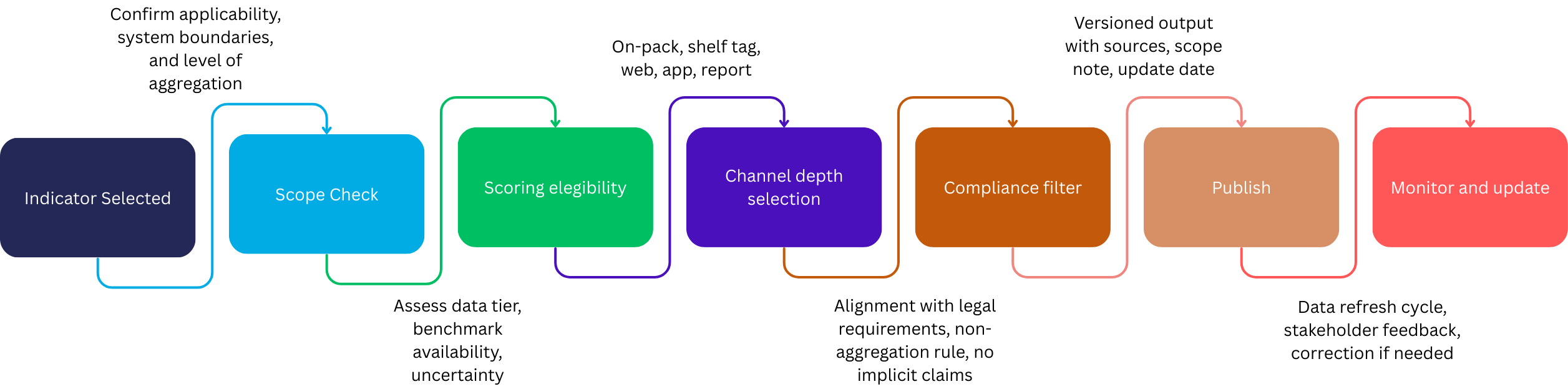
From data to claim- operational pathway
What the guidelines include
The VeriFish Guidelines present a structured approach to sustainability communication based on the three pillars of the VeriFish indicator framework:
🌿 Environmental indicators – addressing ecosystem impacts, fisheries management, climate footprint, and aquaculture practices
🤝 Socio-economic indicators – covering labour conditions, governance, legality, and community impacts
🍽️ Nutritional indicators – highlighting the role of seafood in healthy diets and food security
The guidelines also introduce the concept of distance-to-target scoring, which evaluates performance relative to scientific or regulatory benchmarks rather than ranking products against each other.
Who are the guidelines for?
The guidelines are designed for anyone communicating sustainability information about seafood, including:
Seafood producers and processors
Retailers and food service operators
Consumer organisations and educators
Policymakers and public authorities
Researchers and sustainability experts
They aim to create a common language for seafood sustainability, helping bridge the gap between scientific knowledge and public communication.
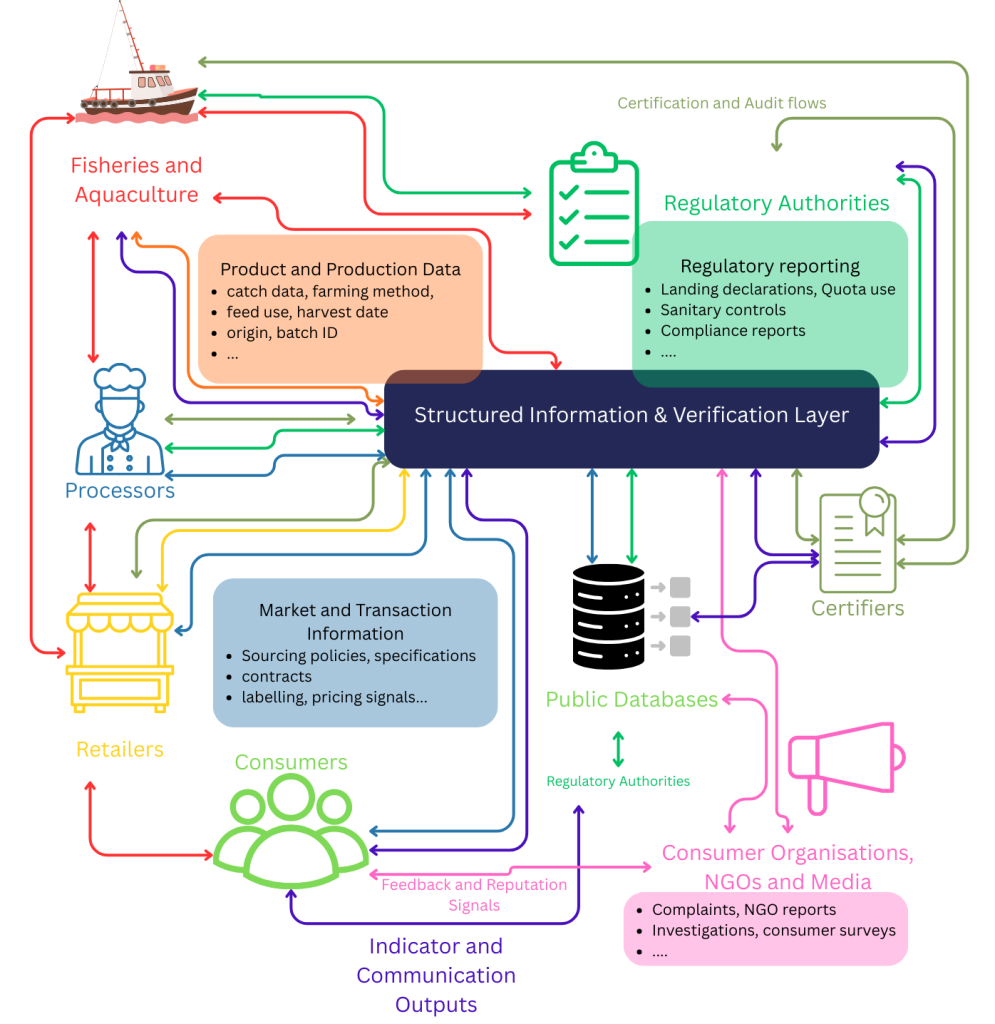
Access the Guidelines
The full VeriFish Guidelines provide detailed explanations, examples, and practical recommendations for responsible sustainability communication.