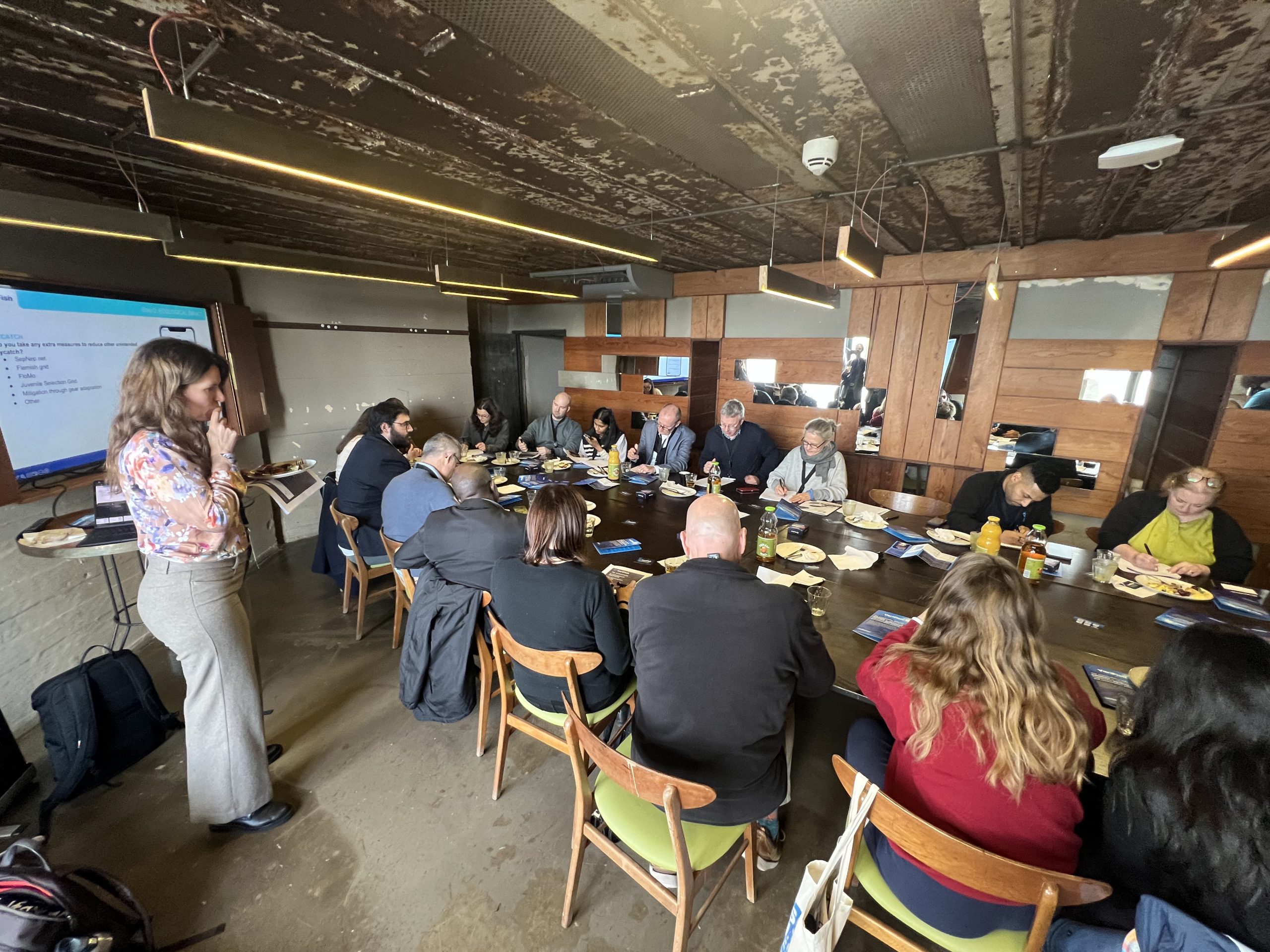
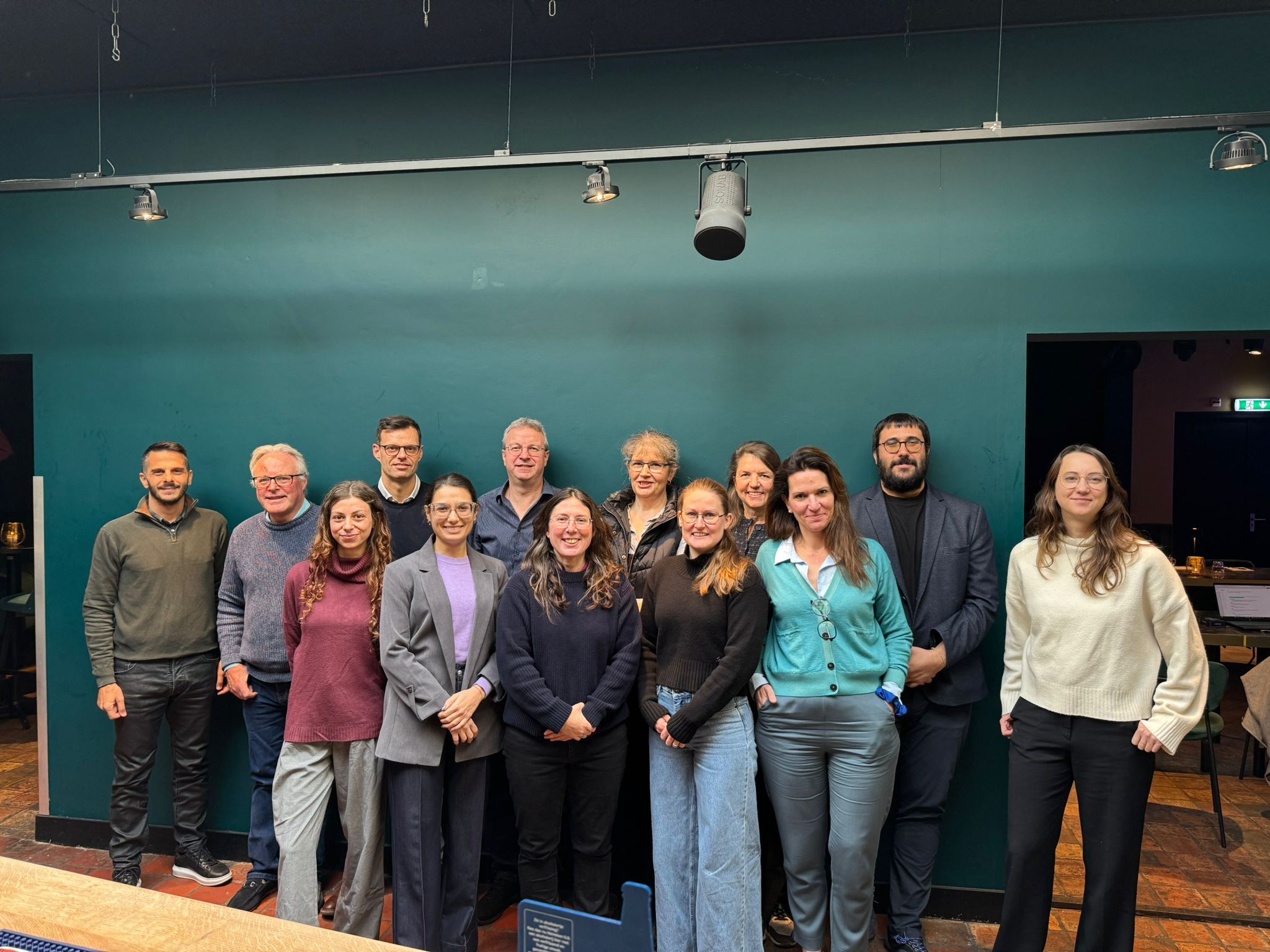
VeriFish Consortium Gathers in Haarlem to Finalise Framework and Prepare Final Project Push

18–19 November 2025
Haarlem, The Netherlands

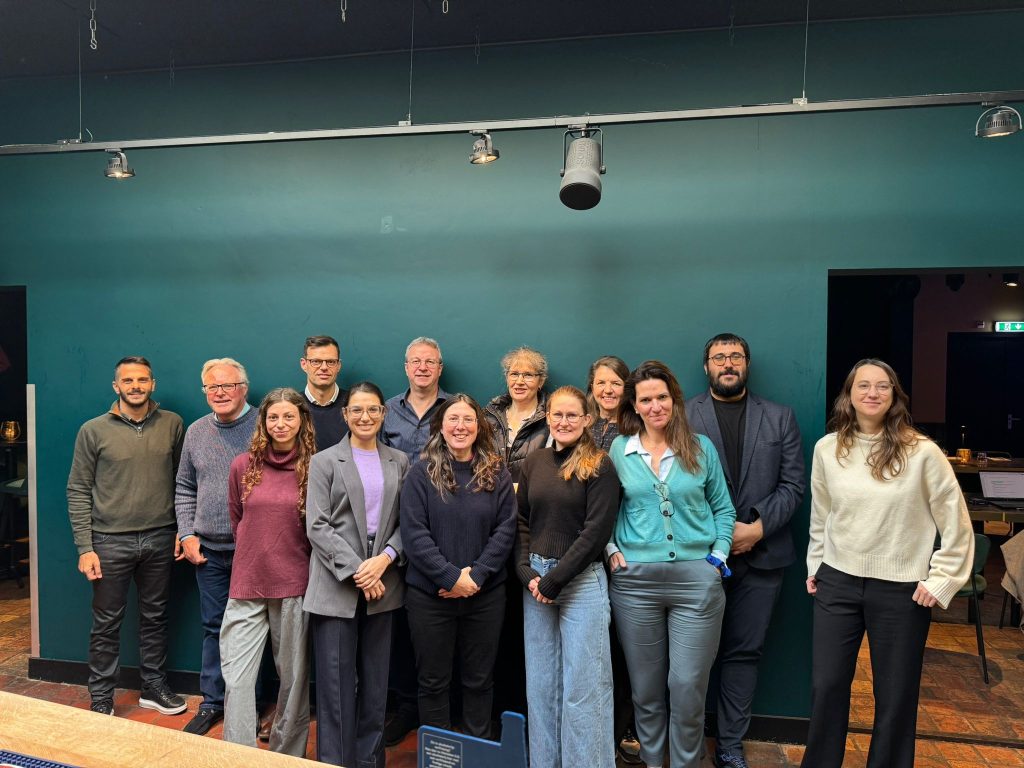
As VeriFish enters its final six months, the project’s core partners came together for a focused two-day consortium meeting in Haarlem. With a clear mandate to consolidate technical results, refine outreach tools, and align on the final dissemination strategy, this fourth in-person gathering marked a pivotal milestone for the initiative.
Sharpening the Core: Finalisation of the VeriFish Indicator Framework

At the heart of VeriFish lies a complex, multidimensional indicator framework designed to help stakeholders — from seafood producers to consumers and regulators — navigate sustainability through science-based, verifiable, and context-adapted metrics.

In Haarlem, significant time was dedicated to:

  • Validating the Tier 1 indicator structure, covering environmental, nutritional, and social dimensions
  • Reviewing the scoring methodology, including weighted aggregation and data-type classification
  • Refining species-specific templates and identifying “indicator blind spots” for both fisheries and aquaculture
  • Addressing grey areas in indicator comparability across wild-caught vs. farmed species

This deep-dive ensured alignment between technical leads, domain experts, and data providers, with clarity on how final scoring outputs will be presented — particularly in consumer-facing tools such as the upcoming VeriFish web app.

Media Products: Science That Travels

Recognising that good science is only impactful when it’s communicated well, the Haarlem meeting also devoted substantial time to the project’s diverse suite of media tools.
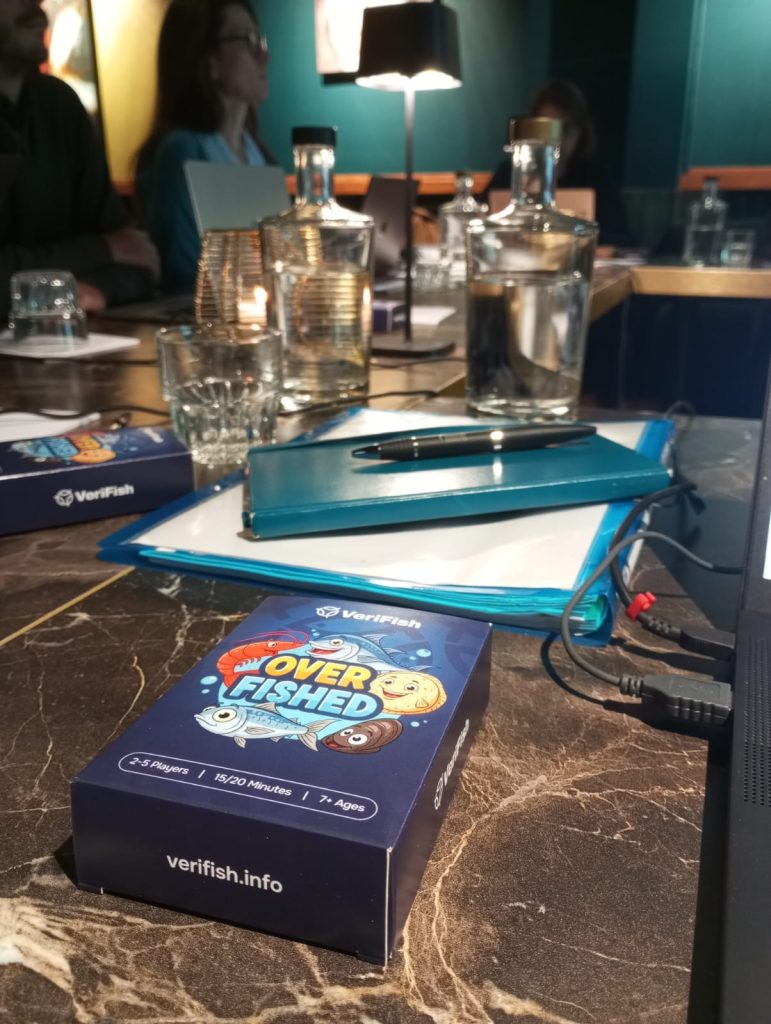
Breakout sessions and full-table reviews were held on:

  • Educational board and card games (e.g., “Overfished!”, “Commodity Families”)
  • Visual outreach products, including posters, seasonal calendars, species fact sheets, and printable activity sets
  • Short-form and documentary-style videos, tied to storytelling campaigns and platform promotion
  • A children’s cookbook featuring sustainable seafood recipes, biodiversity facts, and interactive learning components

Each product was critically assessed for audience targeting, scientific accuracy, language complexity, and translatability — with updates now under way to align all outreach tools with the final version of the VeriFish framework.

Internal Coordination and Exploitation Strategy

The Haarlem meeting also served as a vital checkpoint for:

  • Final deliverable planning — ensuring that all technical, communication, and stakeholder-related outputs are aligned with the project timeline and Horizon Europe obligations.
  • Web app progress — Trust-IT presented the status of the VeriFish beta app and a roadmap for final improvements.
  • Exploitation and legacy planning, including a review of:
    • External interest from non-consortium actors
    • Potential handover of the framework and tools to external bodies
    • Legal, data governance, and visual identity consolidation
    • Cross-project synergies (notably with FishEUTrust, SAFE, and Mr.Goodfish 3.0)

Special attention was paid to the Community of Practice — not just as a dissemination tool, but as a legacy-building mechanism. Discussions explored how the Community could be formalised or extended beyond the end of the project, serving as a stakeholder hub for verified seafood data initiatives.

Team Momentum and a Clear Path Forward

The Haarlem meeting confirmed what has become a hallmark of the VeriFish consortium: a balance between methodological rigour and applied practicality.

Project partners didn’t just debate theory; they translated it into formats producers can use, retailers can trust, and citizens can understand.

The outcomes of the meeting were immediate — feeding directly into:

  • The presentation and working lunch held the following day at the Catch Welfare Platform Conference in IJmuiden
  • Final updates to the web app and game materials
  • A growing queue of events, pilots, and stakeholder engagements planned for the first quarter of 2026
  • Planning for the VeriFish Final Conference (to be announced in early 2026)

Looking Ahead

With the framework entering its final version, outreach tools reaching maturity, and the data structure solidified, VeriFish is now positioned to deliver actionable impact.

The Haarlem meeting proved that the final stretch of the project will not be a passive close-out — but an active sprint toward usability, uptake, and long-term relevance.

Want to be part of what comes next?
Join our Community of Practice or explore our latest media tools and app features at:
🔗 www.verifish.info
📧 Contact: info@verifish.info


VeriFish is funded under Horizon Europe (Grant Agreement No. 101156426) and coordinated by Eurofish International Organisation.
Project duration: May 2023 – April 2026

#VeriFish #HaarlemMeeting #SeafoodIndicators #EUProjects #SeafoodSustainability #MissionOcean #StakeholderEngagement #BlueEconomy #SustainableSeafood #ScienceCommunication #SeafoodEducation #HorizonEurope
David Bassett

Employed by EATiP since 2017, David is responsible for the day-to-day management and direction of this European wide multi-actor ETP. 

Working in the aquaculture industry since 2005, including a decade as the executive of a UK producer association, he has been active in numerous projects from the sixth Framework Programme. Among other roles, David has served as a director of the Scottish Aquaculture Research Forum and served on the Technical Advisory Group of the Aquaculture Stewardship Council (ASC TAG) alongside being invited as a guest lecturer at the Institute of Aquaculture, University of Stirling (UK).  

In addition to working on multiple Horizon Europe projects David is one of the Technical Experts assisting with the implementation of the EU Aquaculture Assistance Mechanism in addition to chairing the research focus group of the Aquaculture Advisory Council (AAC) and sitting on the Standing Committee on Agricultural Research – Fish Committee (SCAR-Fish). 

For further information on EATiP please see www.eatip.eu 

Paul Bulcock

Paul Bulcock is responsible for developing and maintaining aquaculture information in SFP’s systems (e.g., FishSource, AIP Directory, Metrics). He also supports development and implementation of aquaculture strategy through research and analysis.

Paul has extensive program support and aquaculture research experience (particularly in Southeast Asia), having worked for the Network of Aquaculture Centers in Asia-Pacific (NACA) and DFID’s Aquaculture and Fish Genetics Research Programme (AFGRP) at the Institute of Aquaculture, in Stirling, UK. He has an MSc in aquaculture from the University of Stirling and a BSc in marine and fisheries zoology from the University of Aberdeen.

Paul is based in the UK, in Glasgow, Scotland.

Fabio Grati

A fishery biologist presently employed at the National Research Council, Institute for Marine Biological Resources and Biotechnology (Ancona, Italy), he brings to the table more than thirty years of expertise in marine environmental conservation and sustainable resource management. Over the course of his career, he has overseen and participated in numerous international projects focused on understanding and mitigating anthropic impacts on marine ecosystems. Since 2019, he holds a membership in the Scientific, Technical and Economic Committee for Fisheries (STECF) under the European Commission. Within this role, he has chaired two STECF Expert Working Groups (EWG 22-12 and EWG 23-18), where he led efforts to establish scientifically robust yet accessible criteria and indicators for assessing the sustainability of fisheries products.

Andrea Fabris

Andrea Fabris born 11.08.1968, Italian, has a Veterinary Medicine full graduation achieved at the University of Parma. He has also a Specialization in “Farming, Hygiene, Pathology of Aquatic Species and Control of Derivative Products ” achieved at Udine University and a Specialization in “Animal Feeding” obtained at Bologna University.

Actually (from May 2016) he is Director of Associazione Piscicoltori Italiani (API – Italian Fish Farmers Association). At National level behalf of API he is member of some working groups at the General Direction for Fisheries and Aquaculture of Italian Ministry of Agriculture and Italian Ministry of Health regarding aquaculture EU rules and their implementation at national and regional level, and member of Exotic Species Aquaculture Committee – Italian Ministry of Agriculture. Lecturer on in training /courses organized by Ministry of Health, Universities and Local Veterinary Authorities; member of Board of Directors of SIPI (Italian Society of Fish Pathology).

He is also involved at international level with the Federation of European Aquaculture Producers (FEAP) as Chairman of FEAP Fish Health and Welfare Commission. Andrea is part of the FVE (Federation of Veterinarians Europe) Aquaculture Working Group, and of FishMedPlus Coalition, and from the beginning member of Aquaculture Advisory Council (AAC) where is actually Chair of WG1 – Finfish.

He published as an author or co-author about 30 articles on international and national scientific journals concerning Fish pathology and Aquaculture and more than 60 issues on divulgative (fishermen and aquaculture producers associations) publications

Anne Marie Cooper

Anne shapes global sustainable fisheries and aquaculture policies through her work at the science-policy interface. Driven by a commitment to improving human lives and aquatic ecosystems, she serves as the Professional Officer for Fisheries and Aquaculture Advice at the International Council for the Exploration of the Sea (ICES) in Copenhagen, Denmark. Anne leads ICES’ efforts in developing and applying methods to provide scientific advice on data-limited fish and shellfish stocks in the Northeast Atlantic, covering over 60% of ICES stocks. She also heads the development of ICES’
advisory framework for sustainable aquaculture. Before joining ICES, Anne advised on national fisheries, aquaculture, climate, and marine science policy in the US Senate, House of Representatives, and NOAA. She holds a Ph.D. in Conservation Biology and Development Studies and Social Change Theory and an M.Sc. in Fisheries Science from the University of Minnesota.

Pedro Reis Santos

Pedro Reis Santos is Secretary General of the Market Advisory Council (MAC), a stakeholder-led advisory body to the European Commission and to the Member States on matters relevant for the EU market of fishery and aquaculture products, as foreseen by the Common Fisheries Policy Regulation.

Before his appointment, in July 2019, as Secretary General, Mr Reis Santos worked as a consultant for a Brussels-based business intelligence service monitoring EU developments on fisheries, agriculture, food, animal welfare, alcohol and tobacco policy. Prior to that, he was a trainee at the Fisheries Unit of the Council of the European Union and a trainee at the Control Unit of the Portuguese Fisheries Authority.

Mr Reis Santos holds a Bachelor’s degree in Law and a Master’s degree in International Law and International Relations from the University of Lisbon with a thesis titled “Marine Protected Areas beyond National Jurisdiction”. Besides his first language, Portuguese, he speaks English and Spanish

Irene Kranendonk

Irene Kranendonk is the Impact Manager at Fish Tales and a board member of the Fish Tales Foundation. Her work focuses on developing and guiding Fish Tales’ sourcing criteria including management of the environmental and social certification schemes. With the Fish Tales Foundation and local partner organizations, she drives social and environmental improvements in small scale fisheries. Irene holds a master’s degree from Wageningen University in Aquaculture and Marine Resource Management and is specialized in the field of fisheries ecology. In a previous role, Irene was sustainable seafood assessor for the Dutch seafood rating scheme the VISwijzer.