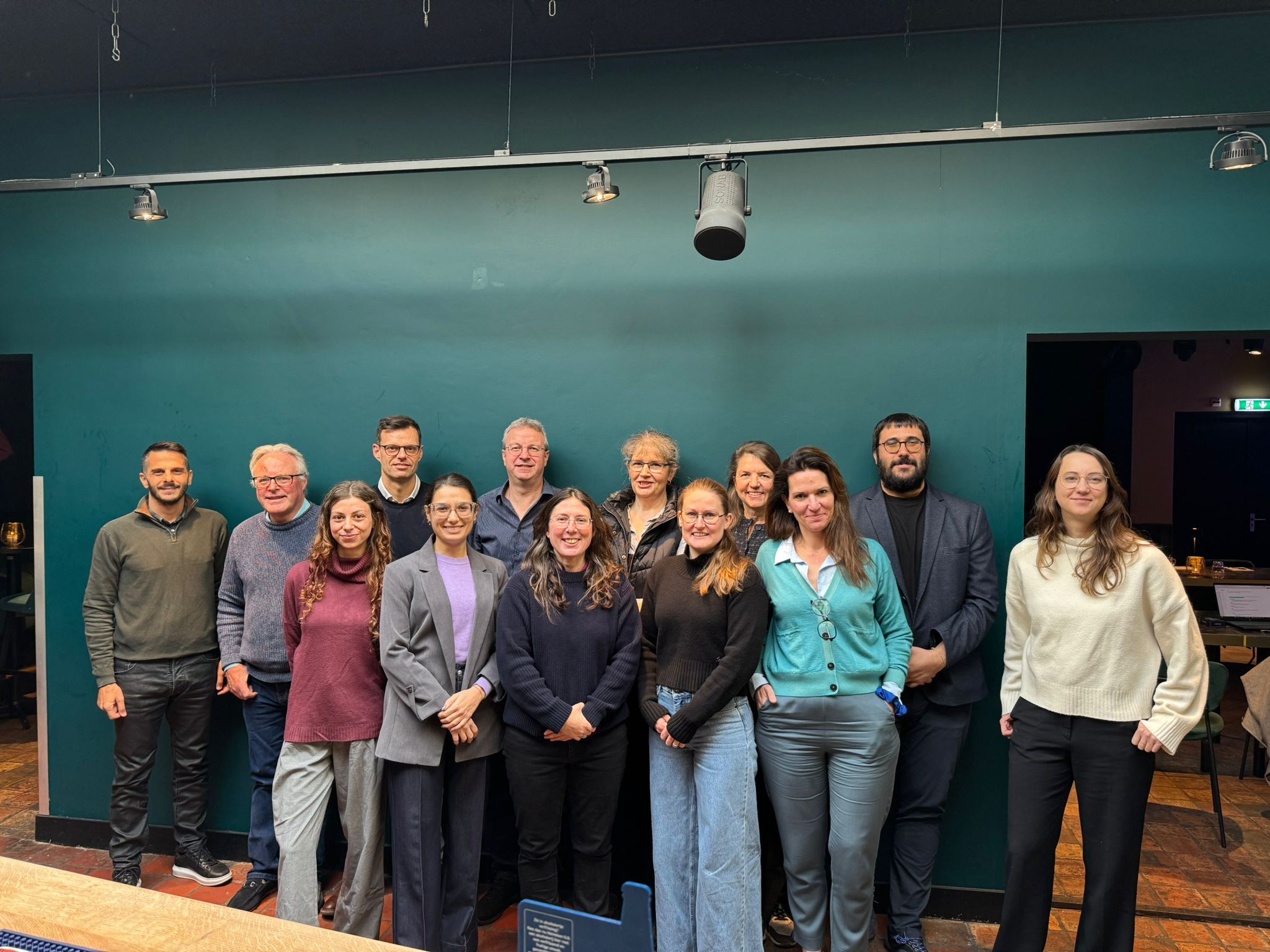
VeriFish at the Catch Welfare Platform Conference: From Indicators to Impact

20 November 2025
Fort Island, IJmuiden – The Netherlands

As the fishing sector begins to engage more seriously with the concept of animal welfare, the Catch Welfare Platform Conference has become one of Europe’s most important spaces for dialogue between science, industry, and innovation.

This year, VeriFish was proud to contribute to the conversation — not just as a guest, but as a presenter and facilitator, bringing evidence-based tools and fresh perspectives to a community eager for practical solutions.

Presenting VeriFish: Science for Stakeholders

In front of a room filled with researchers, vessel operators, retailers, NGOs, and technology providers, Sara Pittonet Gaiarin (Trust-IT Services) presented the latest developments from VeriFish — placing the project firmly at the intersection of sustainability, welfare, and communication.
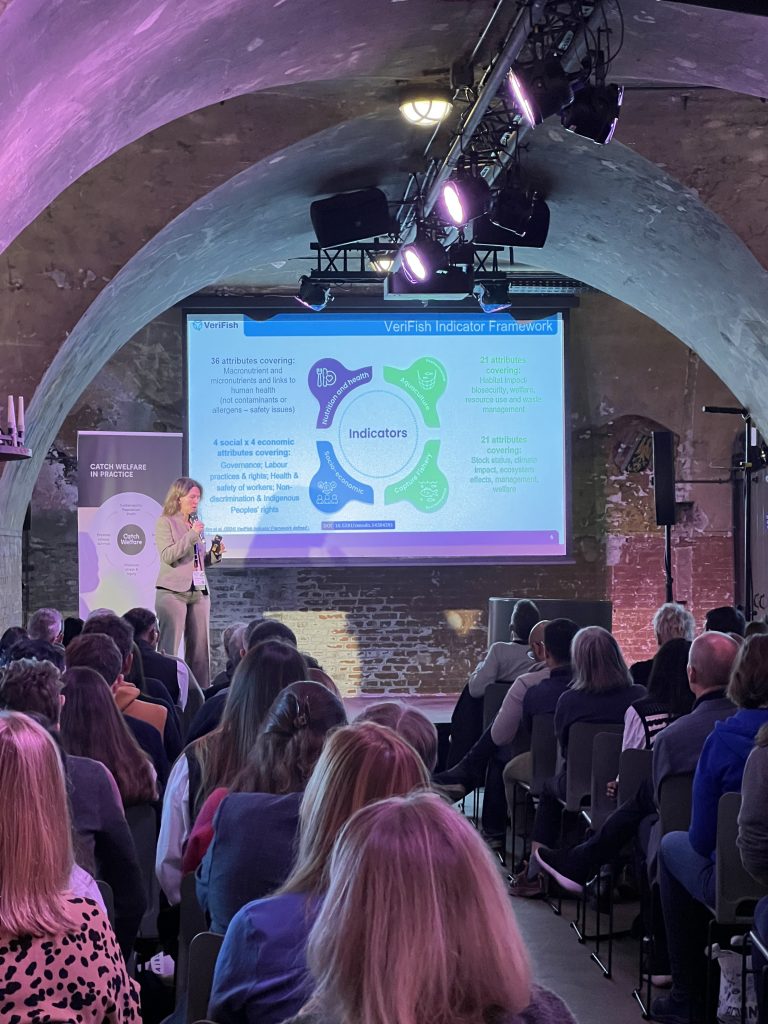
The presentation focused on:

  • ✅ The structure and logic of the VeriFish Indicator Framework, including how welfare criteria are embedded within the broader sustainability context
  • ✅ The project’s upcoming tools — including the mobile app and media products — designed to make seafood indicators visible and actionable
  • ✅ The importance of tiered data collection (especially Tier 2: producer-level operational data) in generating credible, differentiating sustainability claims

Audience interest focused particularly on how VeriFish complements and strengthens welfare initiatives by standardising the way information is measured, scored, and presented, especially in the context of consumer trust and regulatory readiness.

A Working Lunch on Tier 2 Data: Listening, Testing, Improving

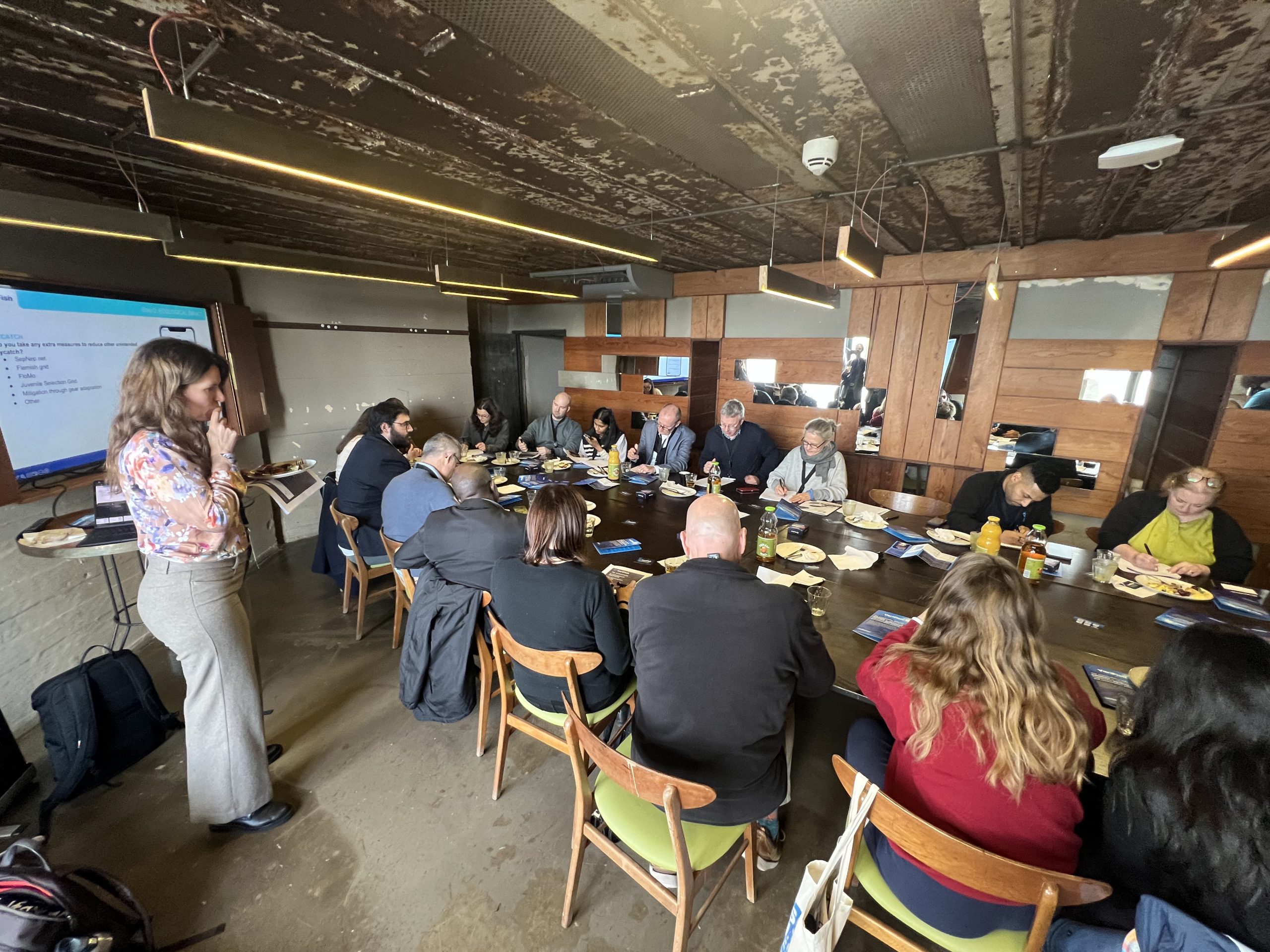
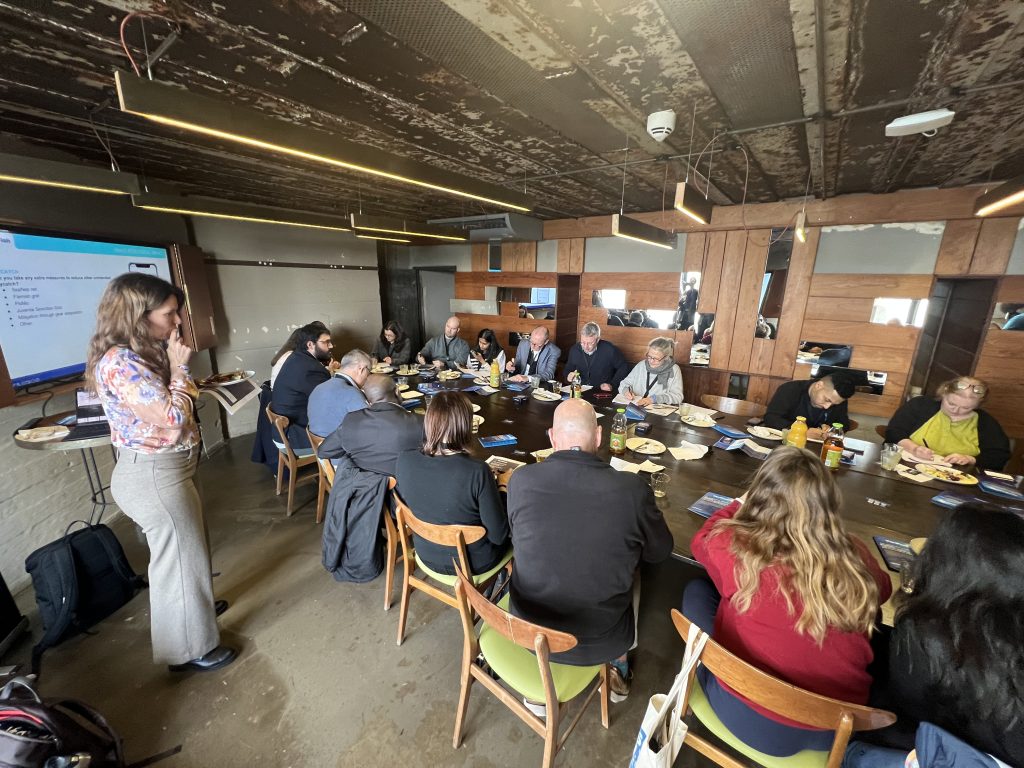
Following the presentation, VeriFish hosted a dedicated working lunch session with selected stakeholders representing fishing companies, technology developers, scientists, and retail professionals.

The session was framed as an open co-creation space with one objective: to improve VeriFish’s approach to Tier 2 data collection and integration, ensuring it is usable in real-world settings — particularly for wild-caught fisheries.

Key outcomes of the session included:

🔹 Validation of the need for flexible, gear- and region-specific indicator inputs
🔹 Insight into the real challenges of recording operational welfare data on vessels
🔹 Early feedback on proposed visual outputs and terminology
🔹 Proposals for lightweight integration with existing reporting systems or certification platforms

Participants welcomed the session’s transparency and usefulness, noting that it was rare for research projects to seek such early, honest feedback on pre-final outputs.
Where Welfare Meets Communication

The day was a clear demonstration of the value of cross-sector collaboration.

For VeriFish, it was an opportunity to:

  • Move from theory to application
  • Test assumptions in front of critical yet supportive audiences
  • Collect new ideas that will directly shape the final product

For the Catch Welfare community, it was a window into how sustainability communication frameworks can support — rather than dilute — the case for fish welfare in capture fisheries.

Thank You to the Catch Welfare Platform VeriFish extends sincere thanks to the Catch Welfare Platform and its manager Michelle Boonstra for the invitation, the space, and the thoughtful programme design.

The alignment between the two initiatives is clear — both aim to drive responsible seafood forward, by bridging science, practice, and communication.

🔗 Learn more about our tools, indicators, and working methods:
📍 www.verifish.info
📧 info@verifish.info

VeriFish is funded under Horizon Europe (Grant Agreement No. 101156426) and coordinated by Eurofish International Organisation.
Catch Welfare Platform 2025 was hosted at Fort Island, IJmuiden, 19–21 November.

#VeriFish #CatchWelfarePlatform #SeafoodSustainability #MissionOcean #AnimalWelfare #Tier2Data #SeafoodCommunication #EUProjects #ScienceToPractice #WildCaptureFisheries #StakeholderEngagement #BlueEconomy #HorizonEurope
David Bassett

Employed by EATiP since 2017, David is responsible for the day-to-day management and direction of this European wide multi-actor ETP. 

Working in the aquaculture industry since 2005, including a decade as the executive of a UK producer association, he has been active in numerous projects from the sixth Framework Programme. Among other roles, David has served as a director of the Scottish Aquaculture Research Forum and served on the Technical Advisory Group of the Aquaculture Stewardship Council (ASC TAG) alongside being invited as a guest lecturer at the Institute of Aquaculture, University of Stirling (UK).  

In addition to working on multiple Horizon Europe projects David is one of the Technical Experts assisting with the implementation of the EU Aquaculture Assistance Mechanism in addition to chairing the research focus group of the Aquaculture Advisory Council (AAC) and sitting on the Standing Committee on Agricultural Research – Fish Committee (SCAR-Fish). 

For further information on EATiP please see www.eatip.eu 

Paul Bulcock

Paul Bulcock is responsible for developing and maintaining aquaculture information in SFP’s systems (e.g., FishSource, AIP Directory, Metrics). He also supports development and implementation of aquaculture strategy through research and analysis.

Paul has extensive program support and aquaculture research experience (particularly in Southeast Asia), having worked for the Network of Aquaculture Centers in Asia-Pacific (NACA) and DFID’s Aquaculture and Fish Genetics Research Programme (AFGRP) at the Institute of Aquaculture, in Stirling, UK. He has an MSc in aquaculture from the University of Stirling and a BSc in marine and fisheries zoology from the University of Aberdeen.

Paul is based in the UK, in Glasgow, Scotland.

Fabio Grati

A fishery biologist presently employed at the National Research Council, Institute for Marine Biological Resources and Biotechnology (Ancona, Italy), he brings to the table more than thirty years of expertise in marine environmental conservation and sustainable resource management. Over the course of his career, he has overseen and participated in numerous international projects focused on understanding and mitigating anthropic impacts on marine ecosystems. Since 2019, he holds a membership in the Scientific, Technical and Economic Committee for Fisheries (STECF) under the European Commission. Within this role, he has chaired two STECF Expert Working Groups (EWG 22-12 and EWG 23-18), where he led efforts to establish scientifically robust yet accessible criteria and indicators for assessing the sustainability of fisheries products.

Andrea Fabris

Andrea Fabris born 11.08.1968, Italian, has a Veterinary Medicine full graduation achieved at the University of Parma. He has also a Specialization in “Farming, Hygiene, Pathology of Aquatic Species and Control of Derivative Products ” achieved at Udine University and a Specialization in “Animal Feeding” obtained at Bologna University.

Actually (from May 2016) he is Director of Associazione Piscicoltori Italiani (API – Italian Fish Farmers Association). At National level behalf of API he is member of some working groups at the General Direction for Fisheries and Aquaculture of Italian Ministry of Agriculture and Italian Ministry of Health regarding aquaculture EU rules and their implementation at national and regional level, and member of Exotic Species Aquaculture Committee – Italian Ministry of Agriculture. Lecturer on in training /courses organized by Ministry of Health, Universities and Local Veterinary Authorities; member of Board of Directors of SIPI (Italian Society of Fish Pathology).

He is also involved at international level with the Federation of European Aquaculture Producers (FEAP) as Chairman of FEAP Fish Health and Welfare Commission. Andrea is part of the FVE (Federation of Veterinarians Europe) Aquaculture Working Group, and of FishMedPlus Coalition, and from the beginning member of Aquaculture Advisory Council (AAC) where is actually Chair of WG1 – Finfish.

He published as an author or co-author about 30 articles on international and national scientific journals concerning Fish pathology and Aquaculture and more than 60 issues on divulgative (fishermen and aquaculture producers associations) publications

Anne Marie Cooper

Anne shapes global sustainable fisheries and aquaculture policies through her work at the science-policy interface. Driven by a commitment to improving human lives and aquatic ecosystems, she serves as the Professional Officer for Fisheries and Aquaculture Advice at the International Council for the Exploration of the Sea (ICES) in Copenhagen, Denmark. Anne leads ICES’ efforts in developing and applying methods to provide scientific advice on data-limited fish and shellfish stocks in the Northeast Atlantic, covering over 60% of ICES stocks. She also heads the development of ICES’
advisory framework for sustainable aquaculture. Before joining ICES, Anne advised on national fisheries, aquaculture, climate, and marine science policy in the US Senate, House of Representatives, and NOAA. She holds a Ph.D. in Conservation Biology and Development Studies and Social Change Theory and an M.Sc. in Fisheries Science from the University of Minnesota.

Pedro Reis Santos

Pedro Reis Santos is Secretary General of the Market Advisory Council (MAC), a stakeholder-led advisory body to the European Commission and to the Member States on matters relevant for the EU market of fishery and aquaculture products, as foreseen by the Common Fisheries Policy Regulation.

Before his appointment, in July 2019, as Secretary General, Mr Reis Santos worked as a consultant for a Brussels-based business intelligence service monitoring EU developments on fisheries, agriculture, food, animal welfare, alcohol and tobacco policy. Prior to that, he was a trainee at the Fisheries Unit of the Council of the European Union and a trainee at the Control Unit of the Portuguese Fisheries Authority.

Mr Reis Santos holds a Bachelor’s degree in Law and a Master’s degree in International Law and International Relations from the University of Lisbon with a thesis titled “Marine Protected Areas beyond National Jurisdiction”. Besides his first language, Portuguese, he speaks English and Spanish

Irene Kranendonk

Irene Kranendonk is the Impact Manager at Fish Tales and a board member of the Fish Tales Foundation. Her work focuses on developing and guiding Fish Tales’ sourcing criteria including management of the environmental and social certification schemes. With the Fish Tales Foundation and local partner organizations, she drives social and environmental improvements in small scale fisheries. Irene holds a master’s degree from Wageningen University in Aquaculture and Marine Resource Management and is specialized in the field of fisheries ecology. In a previous role, Irene was sustainable seafood assessor for the Dutch seafood rating scheme the VISwijzer.