A Croatian small-scale fisher reflects on changing seas, shifting species, and why consumers should ask more questions about the fish they buy.
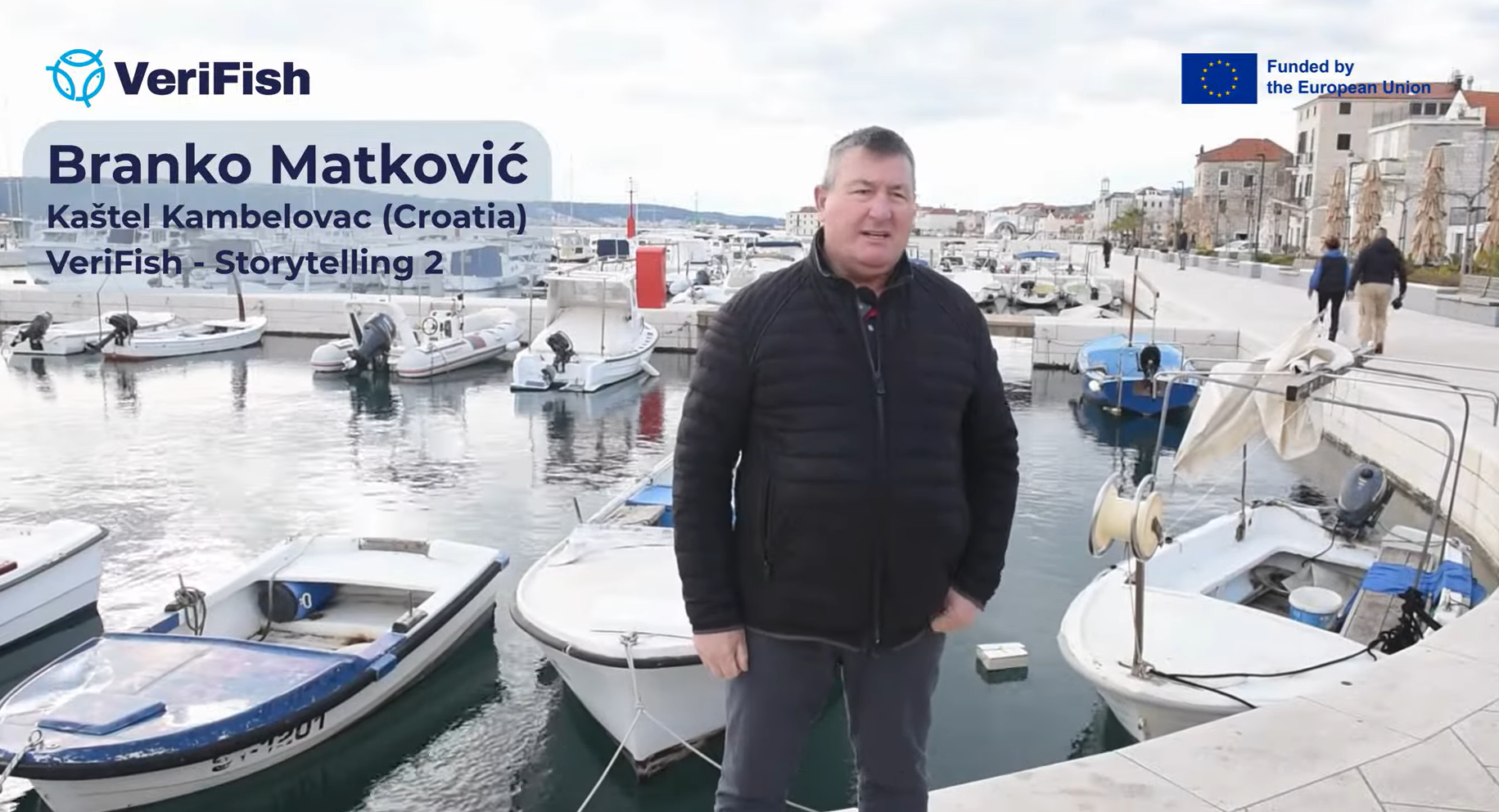
In the second video of the VeriFish storytelling campaign, Croatian fisher Branko Matković offers a direct and practical perspective on what sustainable fisheries look like from the deck of a small-scale fishing vessel.
Branko, from Kaštel Kambelovac, Croatia, has worked as a commercial fisher for around 12 to 13 years. But, as he explains, his connection to the sea began much earlier. Before becoming a fisher himself, he spent years around the coast and in close contact with the fishing community of Kaštela. That early exposure shaped both his affection for the sea and his decision to enter the profession.
In the video, Branko describes a marine environment that is changing fast and not always for the better. He points to a range of pressures affecting fisheries today: the presence of large fish and marine mammals that damage gear and catches, overfishing, the capture of undersized fish, and the arrival of new species, while some native fish are becoming increasingly scarce.
For Branko, these are not abstract environmental trends. They are daily realities that affect whether fishing remains economically possible. One of the clearest examples he gives is the need to adapt gear. The nets used in the past are no longer always suitable, so fishers have had to switch to different types of gillnets in order to continue operating.
His testimony highlights an important point: small-scale fishers are often on the front line of ecological change. They experience shifting ecosystems directly and must respond quickly if they want to keep their businesses alive.
But Branko’s message is not only for fellow fishers. It is also aimed at consumers.
He stresses that people should pay attention to where fish comes from, who caught it, when it was caught, and with what type of gear. In his view, fish sold directly by small-scale fishers is often among the freshest available, because it is usually not frozen and is sold daily at fish markets or directly from the vessel.
When eating seafood in a restaurant, he says consumers should also look for key information such as the lot code, the origin of the fish, and visible signs of freshness, including the appearance of the eyes and gills.
Underlying all this is a broader argument: better seafood choices depend on better information. Consumers need clear and trustworthy signals, and fishers need stronger support if sustainable fishing is to remain viable. Branko concludes that support for fisheries should come at every level, from the top down to local authorities, with greater investment in the sector and in improving overall conditions for fishing.
His story is a reminder that sustainability is not only about indicators and data. It is also about people, places, adaptation, and the everyday decisions made both at sea and on land.
Through its storytelling campaign, VeriFish brings forward these voices from across Europe to help make seafood sustainability more understandable, relatable, and grounded in real experience.